Most prayer plant problems have one of three root causes: water (too much or too little), humidity, or light. The leaves tell you which one — if you know what to look for.
We’ve worked through every problem on this list with our own Maranta leuconeura. Here is the diagnostic we use, starting with the most common symptom.
Quick Reference
- Most common problem: Leaves curling inward — low humidity or underwatering
- Most urgent problem: Yellow + mushy stems — root rot from overwatering
- Early warning sign: Leaves stop folding at night — stress before visible damage
- Brown tips (crispy): Low humidity or tap water minerals
- Pale/washed-out leaves: Too much direct sun
- No new growth: Too cold, too dark, or root-bound pot
Prayer Plant Leaves Curling Inward
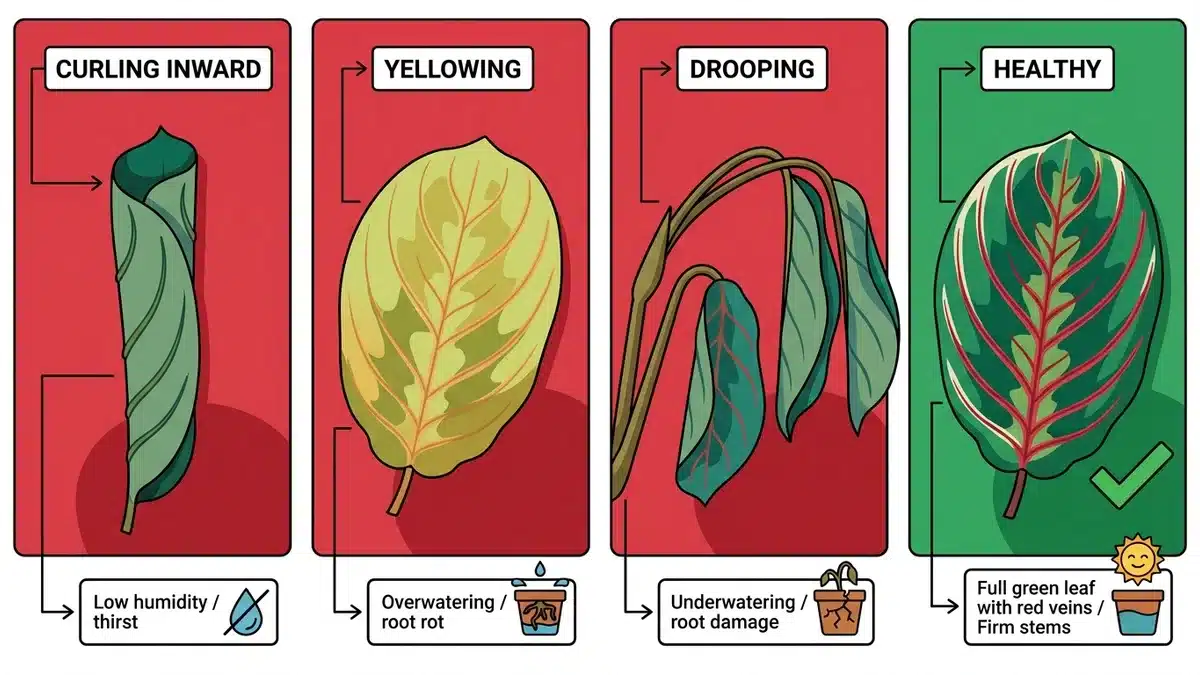
Curling? Almost always low humidity or underwatering. Here’s how to tell which.
For this part of the guide, a researched product option that fits the job is:
Selected because this section is specifically about humidifier use. Check Amazon for current price and availability.
Feel the soil first. If the top 2 inches are bone dry and the leaves feel papery to the touch, it’s thirst. Water thoroughly, let it drain, and the leaves should unfurl within hours. If they don’t, the roots may be damaged from prolonged drought.
If the soil is moist but leaves are still curling, the problem is humidity. Maranta leuconeura needs 50–65% humidity. Below 40%, the leaves begin curling to reduce water loss from their surface area. In a typical centrally heated apartment in winter, humidity often drops to 30–35%.
The fix:
- Water issue: water thoroughly with filtered or rainwater, never let the pot sit bone dry.
- Humidity issue: move to a naturally humid room (bathroom, kitchen), use a pebble tray with water, or run a humidifier nearby. Misting helps briefly but doesn’t maintain humidity levels.
Prayer Plant Leaves Turning Yellow
Yellow leaves on a prayer plant almost always mean overwatering — but not always. Here is the full diagnostic in order of likelihood.
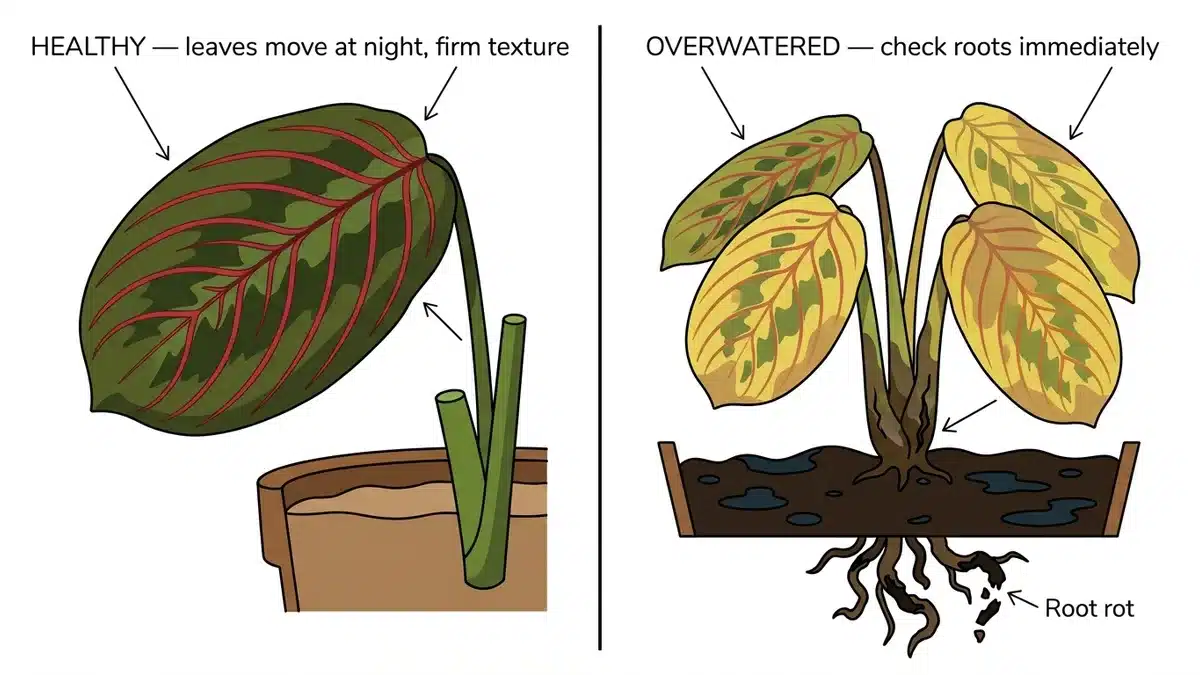
- Overwatering (most common): Waterlogged soil prevents roots from absorbing oxygen. The leaves yellow from the bottom upward. Check the soil — if it’s been wet for more than 2 weeks without drying out, this is the cause. Let it dry out completely before watering again.
- Root rot: If overwatering continues, roots begin to rot. The plant yellows rapidly despite wet soil. Remove from the pot, trim black/mushy roots, repot in fresh mix.
- Natural leaf ageing: Lower leaves yellow and die naturally as the plant matures. One yellow leaf at the bottom every few weeks is normal.
- Nutrient deficiency: Uniform pale yellowing (not patchy) after months without fertilising can indicate nitrogen deficiency. Feed monthly in spring and summer.
The fastest diagnostic: Feel the soil. Wet soil + yellow leaves = overwatering. Dry soil + yellow leaves = either nutrient deficiency or the plant was previously overwatered and the roots are now damaged.
Prayer Plant Drooping
Drooping means the stems are losing rigidity. There are two completely opposite causes — and treating the wrong one makes things worse.
For this part of the guide, a researched product option that fits the job is:
Selected because this section is specifically about soil moisture meter use. Check Amazon for current price and availability.
Underwatering: The most common cause. When severely thirsty, the entire plant wilts and stems lose rigidity. Water thoroughly and it should perk up within 2–4 hours. If it doesn’t bounce back, the root system may be damaged from extended drought.
Root rot from overwatering: This is the serious one. If the soil is wet or damp and the plant is drooping, the roots are likely rotting and can no longer transport water upward. You’ll often smell something foul from the soil. Gently remove the plant from the pot and inspect the roots — healthy roots are white/tan, rotted roots are black and mushy.
Temperature shock: Moving the plant from a warm room to a cold one (especially in winter near a window) can cause sudden drooping. Prayer plants suffer below 60°F (15°C).
Brown Tips and Crispy Edges
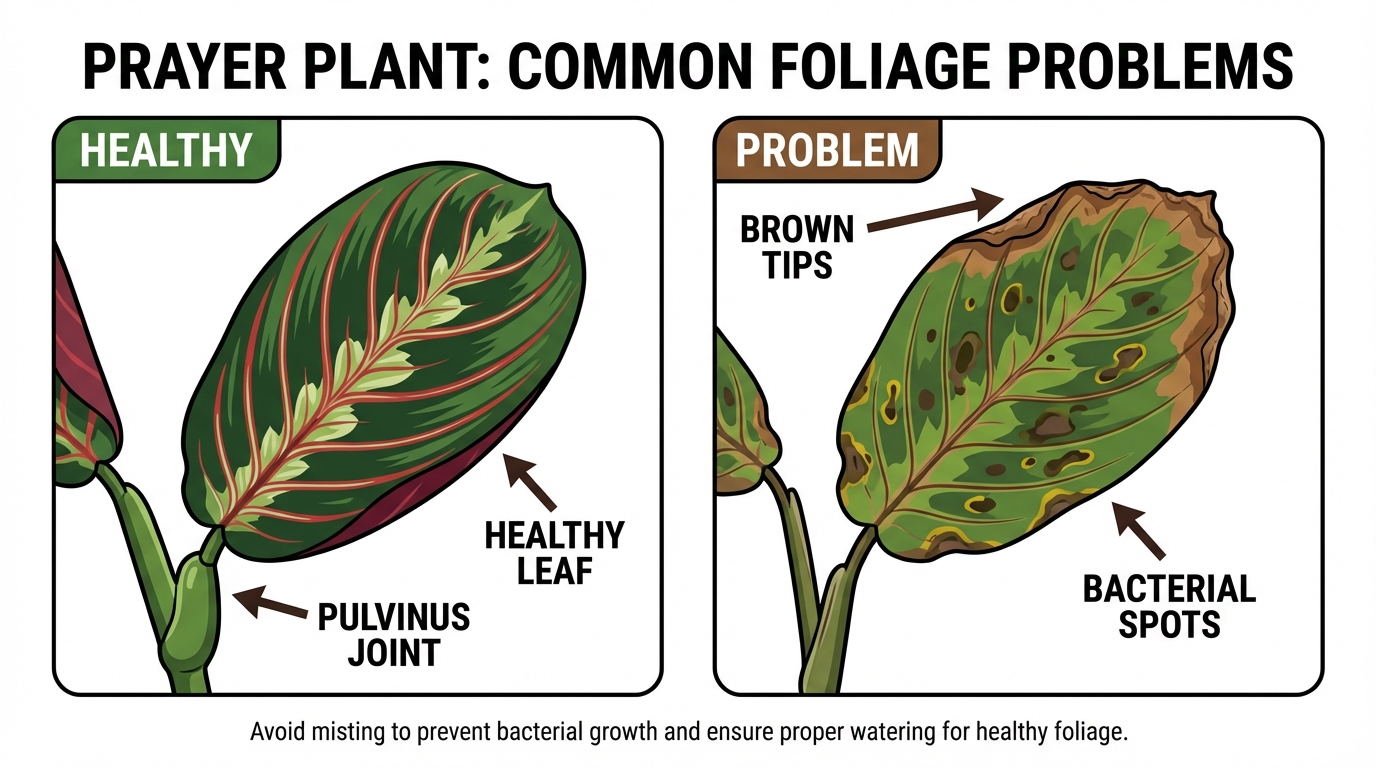
Brown crispy tips are the most common cosmetic complaint. The good news: they don’t indicate a serious health problem. The bad news: they don’t reverse once the tip is brown.
The three causes, in order of frequency:
- Low humidity: The most common culprit. Prayer plants need 50%+ humidity. Below 40%, leaf tips desiccate. Fix: humidifier or move to a naturally humid room.
- Tap water minerals: Hard water deposits salts in the soil and on leaf edges over time. Emilie switched to filtered water for ours after the brown tips appeared — no new tips browned within two months.
- Direct sun: Even brief periods of direct afternoon sun will scorch the tips on prayer plant leaves. These burn marks are permanent.
You can trim the brown tips with clean scissors following the natural leaf shape if the appearance bothers you. This is cosmetic only — it doesn’t help or hurt the plant.
Overwatered Prayer Plant: How to Recover It
Overwatering is the #1 killer of prayer plants. Here is the recovery process.
- Remove from pot and inspect the root ball.
- Trim all black, mushy, or foul-smelling roots with clean scissors. Healthy roots are white to tan and firm.
- Let the root ball air dry for 1–2 hours before repotting.
- Repot in fresh, well-draining mix — 60% potting soil, 40% perlite. A slightly smaller pot is better than the previous one if the original pot was too large.
- Water lightly just enough to moisten the mix. Do not water again until the top 2 inches are dry.
- Keep humidity high during recovery — stressed roots need every advantage.
If less than 30% of roots were affected, the plant usually recovers fully within 4–6 weeks. If the majority of roots were rotted, it’s a harder recovery.
🌱 Full care guide
Understanding the causes prevents problems from recurring. Prayer Plant Care Guide
💧 Watering and soil guide
The right watering routine prevents most of these problems. Prayer Plant Watering & Soil Guide
🌝 Why leaves stop folding
If leaves stopped moving at night, it’s often the first sign of these problems. Why Prayer Plants Move and Close at Night
Prayer Plant Problems FAQ
Why are my prayer plant leaves curling?
Curling leaves on a prayer plant are almost always caused by low humidity (below 40-50%) or underwatering. Feel the soil: if dry, water thoroughly. If moist, raise humidity to 50-60% using a humidifier or pebble tray.
Why are my prayer plant leaves turning yellow?
Yellow leaves most commonly indicate overwatering. Check the soil — if it has been wet for more than 2 weeks, let it dry out completely before watering again. Single lower leaves yellowing naturally is normal ageing.
Why is my prayer plant drooping?
Drooping means either underwatering (soil is dry — water immediately) or root rot from overwatering (soil is wet and smells bad — remove from pot and trim rotted roots). The treatment is opposite, so check the soil moisture first.
Can prayer plant brown tips be fixed?
No — brown tips do not reverse once browned. You can trim them cosmetically. Prevent new ones by raising humidity to 50%+, switching to filtered water, and keeping the plant out of direct sun.
How do I save an overwatered prayer plant?
Remove from pot, trim all black/mushy roots, air dry the root ball for 1-2 hours, repot in fresh well-draining mix (60% soil, 40% perlite), and water very lightly. Recovery takes 4-6 weeks.
About The Plant Manual
We’re Joakim and Emilie, a plant-loving couple from Aarhus, Denmark. Joakim researches and builds. Emilie keeps things alive. Together, we share what we’ve learned (including plenty of failures) to help you grow happy, healthy plants.
We’re passionate plant enthusiasts, not professional botanists. Our advice comes from research and real experience in our own apartment.