

Is Wandering Jew Toxic to Cats?
If you are wondering, is wandering jew toxic to cats, the direct answer is yes. We asked the exact same question before bringing our first Wandering Jew into our Aarhus apartment.
Joakim checked the ASPCA plant database to understand the science behind the toxicity. He found that tradescantia toxic to cats reports stem from an irritating sap inside the stems that causes mild stomach upset and skin dermatitis.
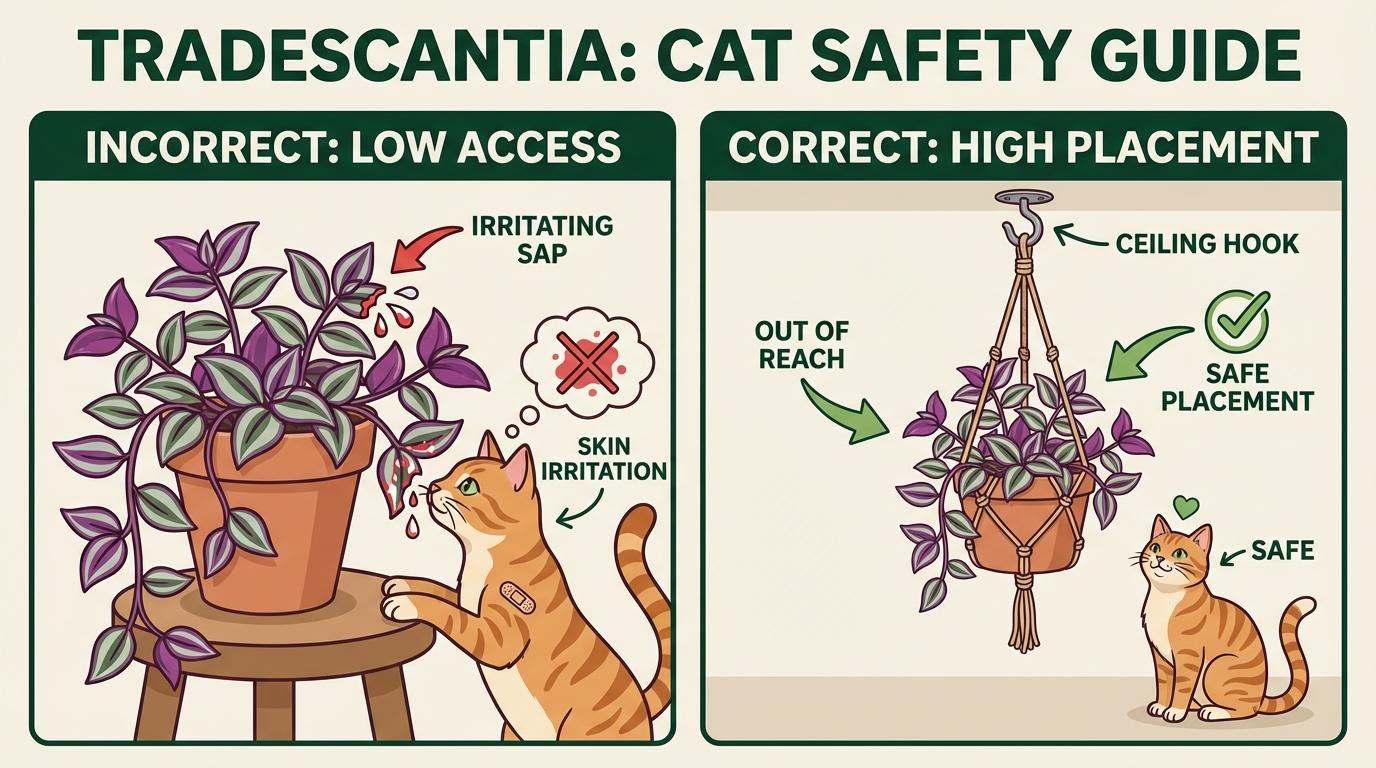
Thankfully, managing wandering jew toxic to cats care is quite simple in practice. Because these plants need plenty of light to keep their purple color, Emilie simply hangs our pots from ceiling hooks, keeping them completely out of paw reach.
Balancing pet safety while growing wandering jew toxic to cats just takes a bit of spatial planning. Below, we explain exactly why a wandering dude toxic to cats reaction happens and how to spot the physical symptoms.
We will also share our daily routines for keeping a healthy wandering jew toxic to cats safe from, and completely out of reach of, your curious feline friends.
📚 Want to learn more about Wandering Jew?
Read our deep-dive guide: Wandering Jew Care Guide
What Makes Wandering Jew Poisonous?
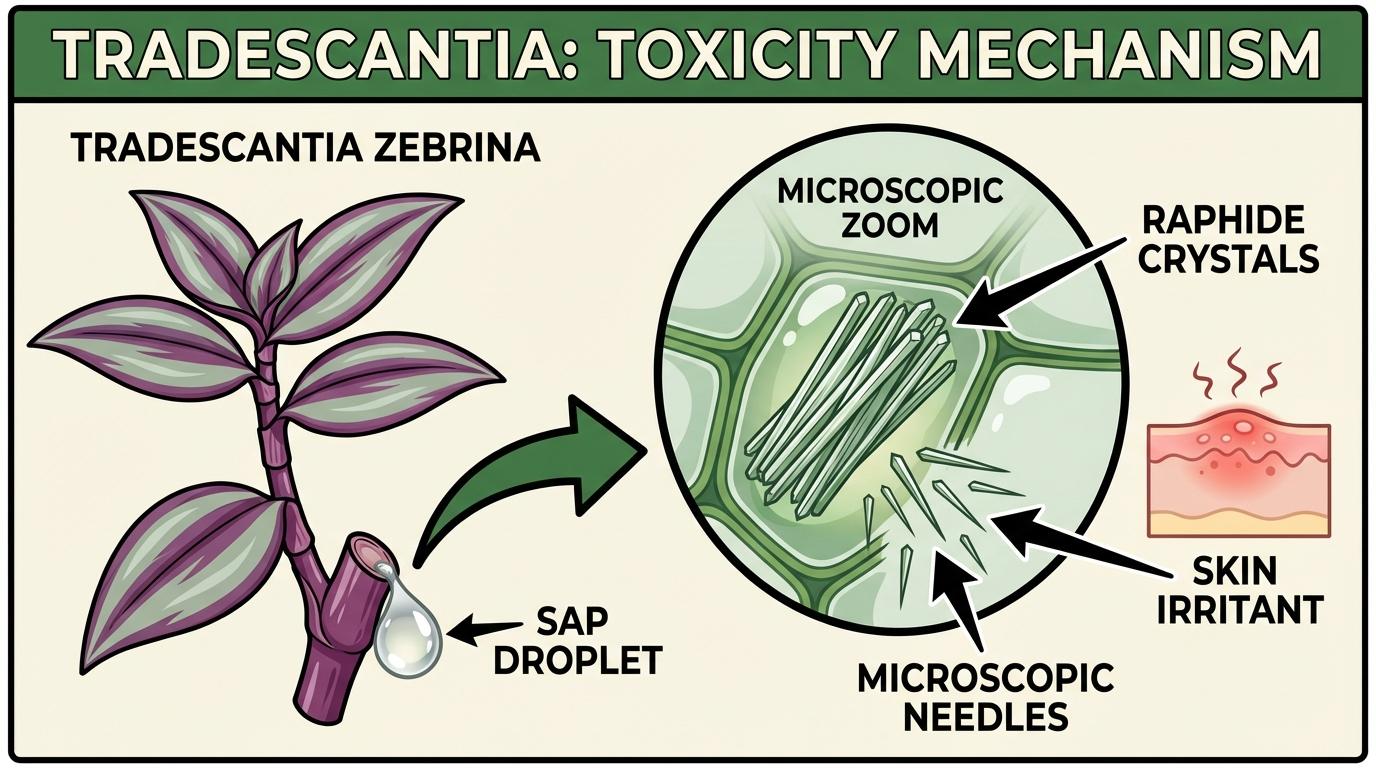
Understanding wandering jew toxic to cats issues comes down to a specific defense mechanism built into the plant’s sap. When readers ask about toxicity, Joakim points straight to wandering jew toxins calcium oxalate. These are microscopic, needle-like structures found inside the stems and leaves.
Think of these tiny crystals as invisible shards of glass. When an animal bites the stem, these sharp needles release and pierce the soft tissues of the mouth and stomach. This physical damage is exactly what makes tradescantia toxic to cats.
We learned about this sap firsthand when we decided to propagate our plant in our Aarhus apartment. The clear juice got on Emilie’s skin and caused a red, itchy rash. Because of this, wearing gloves is now a non-negotiable part of our wandering jew toxins calcium oxalate care routine.
This intense physical irritation is the main reason why is wandering jew toxic to cats. If your feline friend chews the leaves, the crystals embed directly in their mouth. You will quickly notice symptoms like excessive drooling, vomiting, or pawing at the face.
According to the clinical experts at the ASPCA Animal Poison Control, the plant causes mild to moderate dermatitis. While growing wandering jew toxins calcium oxalate sounds intimidating, the reaction is rarely systemic. The damage is purely a localized, physical irritation.
You can still keep a healthy wandering jew toxins calcium oxalate plant simply by placing it completely out of reach. We keep our Wandering Jew suspended from ceiling hooks to avoid any wandering dude toxic to cats accidents. This keeps our pets safe and our minds at ease.
📚 Want to learn more about Wandering Jew?
Read our deep-dive guide: Wandering Jew Care Guide
Symptoms of Wandering Jew Poisoning in Cats
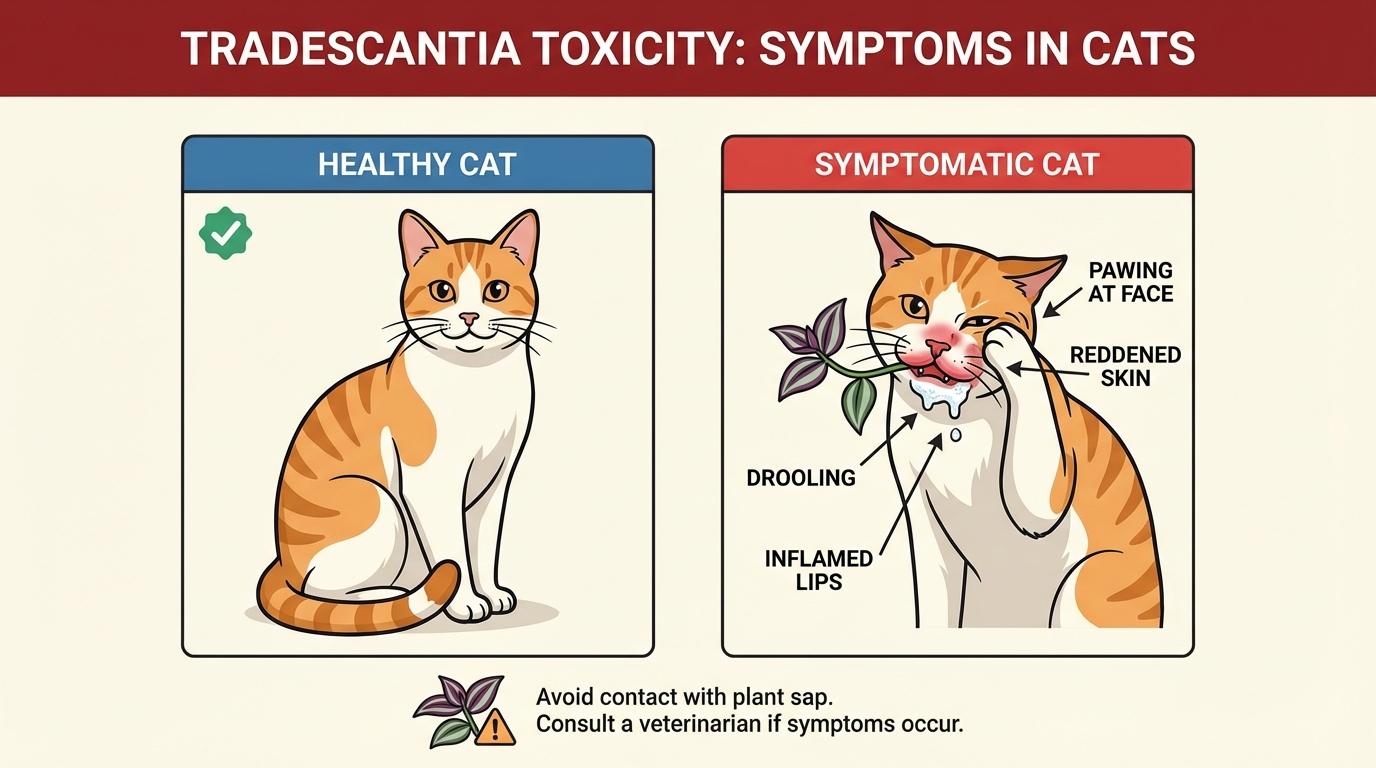
If your feline friend takes a bite of your plant, recognizing the wandering jew poisoning symptoms cats display is your very first priority. We once caught our neighbor’s cat sniffing around a dropped cutting in our Aarhus apartment, which sent us straight into observation mode.
Because tradescantia toxic to cats reactions come from sharp calcium oxalate crystals in the sap, the signs are highly localized. You will rarely see severe internal issues, but rather immediate physical discomfort around the mouth and skin.
Watch closely for these common signs of irritation:
- Excessive drooling, foaming, or frequent smacking of the lips.
- Frantic pawing at the mouth, face, or eyes.
- Red, inflamed skin, especially on hairless areas like the nose or lips.
- Mild vomiting if a piece of the leaf was swallowed.
It is important to remember that even on a perfectly healthy wandering jew poisoning symptoms cats display are caused by its natural sap. It is just the plant’s biological way of protecting its leaves from being eaten in the wild.
People often ask us, is wandering jew toxic to cats enough to warrant an emergency vet visit? While the toxicity is generally mild, severe swelling around the throat or eyes means you should call your vet immediately.
Proper wandering jew poisoning symptoms cats care begins with quick, gentle action at home. If you catch your cat chewing a leaf, gently flush their mouth and face with lukewarm tap water to wash away the sharp crystals.
To completely avoid any wandering dude toxic to cats accidents, prevention is always your best tool. We keep our Wandering Jew suspended in a high macrame hanger, keeping our indoor jungle completely safe for curious paws.
📚 Want to learn more about Wandering Jew?
Read our deep-dive guide: Wandering Jew Care Guide
What to Do If Your Cat Eats Wandering Jew
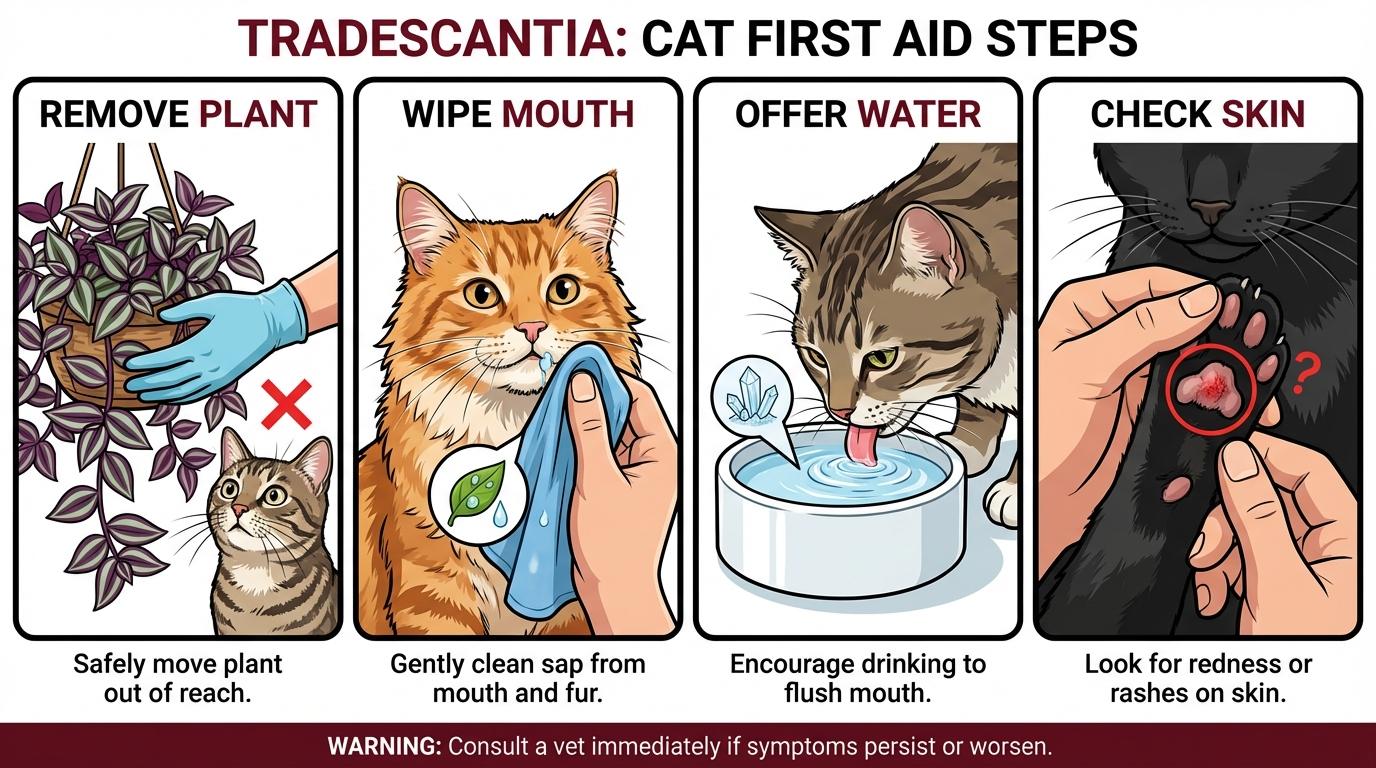
Knowing exactly what to do if cat eats wandering jew will save you a lot of sudden panic. First, calmly remove the plant from the room. Next, gently wipe your cat’s mouth and face with a cool, damp cloth to remove the irritating sap.
Joakim looked into the toxicity reports on the ASPCA database to understand the science. He found that tradescantia toxic to cats reactions are caused by microscopic calcium oxalate crystals. It is a physical irritant, not a systemic poison, meaning it will not cause organ failure.
When searching for what to do if cat eats wandering jew care, your main goal is simply soothing their mouth. Offer your cat fresh water or a small saucer of lactose-free milk. The cool liquid helps flush the sharp crystals away from their throat.
We frequently get asked: is wandering jew toxic to cats enough to cause a medical emergency? Thankfully, most wandering jew toxic to cats symptoms stay very mild. However, if you notice severe swelling around their throat or difficulty breathing, call your vet immediately.
A healthy what to do if cat eats wandering jew response plan also means watching for skin rashes. Emilie always checks our cat’s paws after an incident because they will naturally rub their stinging faces. You might need to gently wash the affected fur with warm water.
While your vines are growing, what to do if cat eats wandering jew accidents is largely about long-term prevention. To stop a wandering dude toxic to cats incident entirely, we keep our Wandering Jew suspended in hanging baskets far out of reach indoors.
📚 Want to learn more about Wandering Jew?
Read our deep-dive guide: Wandering Jew Care Guide
How to Keep Cats Safe Around Wandering Jew
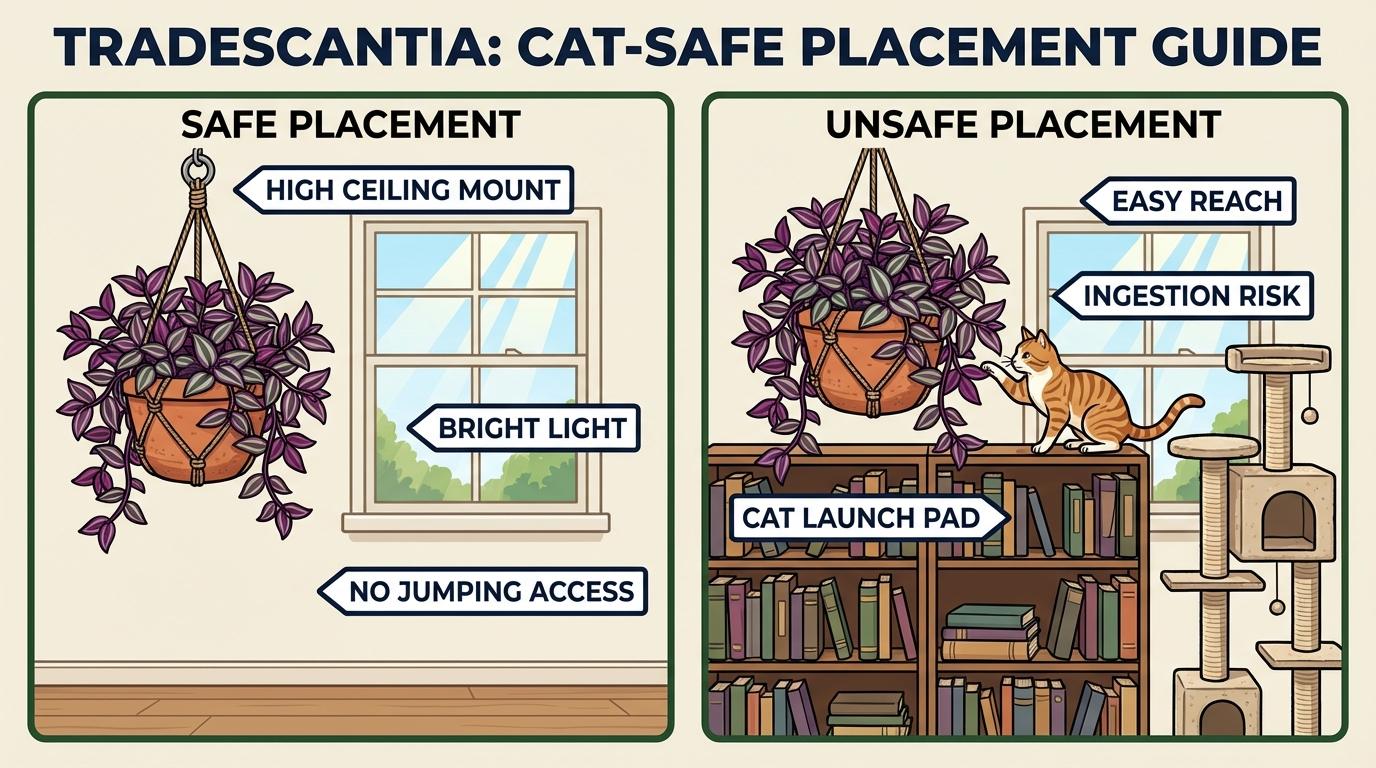
The secret to how to keep cats safe wandering jew is simply removing physical access. Since we know is wandering jew toxic to cats due to its irritating sap, we rely heavily on vertical space in our Aarhus apartment.
Our go-to strategy for a healthy keep cats safe wandering jew setup is hanging baskets. Wandering Jew trails downward naturally, making ceiling hooks the perfect solution. It keeps the plant happy and our feline friends out of trouble.
As Joakim learned from reading the ASPCA plant database, tradescantia toxic to cats reactions happen from direct contact. Hanging the pots ensures curious paws cannot reach the stems to chew on them.
Strategic Lighting and Placement
These plants need bright light to produce anthocyanin, the pigment that acts as the plant’s sunscreen and gives it that signature purple color. Emilie hangs our pots right in our east-facing windows.
This placement solves two problems at once. It provides the necessary light intensity for color expression while effectively managing the wandering dude toxic to cats risk. You get a beautiful display without the worry.
When you are growing keep cats safe wandering jew, be mindful of your furniture placement. Cats are excellent jumpers. Make sure your hanging baskets are not suspended directly above a bookshelf or sofa they use as a launching pad.
Managing Falling Leaves
Older vines will naturally lose their leaves at the base due to normal plant senescence. We often find crispy leaves on the floor, which still pose a mild wandering jew toxic to cats hazard.
Routine keep cats safe wandering jew care means sweeping up these dropped leaves quickly. Because old vines rarely regrow leaves at the base, Emilie regularly trims the long ends to maintain a full pot.
You can easily propagate these cuttings by sticking them directly back into the soil. This continuous trimming method keeps our plants bushy and drastically reduces the amount of shedding we have to clean up indoors.
📚 Want to learn more about Wandering Jew?
Read our deep-dive guide: Wandering Jew Care Guide
Is Wandering Jew Toxic to Dogs?
When asking is wandering jew toxic to dogs, the short answer is yes. Dogs are sensitive to the sharp calcium oxalate crystals hidden inside the plant’s sap. If your dog chews the vines, you will quickly notice excessive drooling, vomiting, or pawing at their mouth.
Joakim checked the ASPCA Animal Poison Control database, which confirms the toxicity of this plant causes contact dermatitis. While the name tradescantia toxic to cats is more commonly searched, dogs react to the exact same irritating sap found in the stems.
When friends bring their dogs over to our Aarhus apartment, Emilie simply moves our low-hanging pots to a higher hook. Balancing wandering jew toxic to dogs care just means keeping the vines out of snout reach. The physical sting is unpleasant, but rarely systemic.
People often ask us: is wandering jew toxic to cats in the same way? Yes, the biological mechanism is identical. Whether you are worried about a wandering dude toxic to cats incident or a puppy chewing a leaf, the physical symptoms are exactly the same.
Managing Dog Safety
A healthy wandering jew toxic to dogs strategy relies entirely on smart placement. We keep our Wandering Jew suspended in hanging planters. Since dogs do not climb furniture, simply elevating the pots completely solves the problem indoors.
You also need to watch for falling debris. When growing wandering jew toxic to dogs safely, remember that older vines naturally drop crispy basal leaves. We quickly sweep our floors so curious dogs cannot eat the dried debris.
If your vines get leggy and drop too many leaves, Emilie recommends taking fresh cuttings. You can easily propagate the top growth directly back into the soil. This keeps the plant looking bushy while reducing the mess on your floor.
Finally, remember these plants need plenty of light to maintain their purple color. We hang ours near our east-facing windows, which provides the necessary rays while keeping the trailing stems safely above dog level. If an accident happens, gently wash your dog’s mouth with water.
📚 Want to learn more about Wandering Jew?
Read our deep-dive guide: Wandering Jew Care Guide
Wandering Jew Skin Irritation in Humans
While we often worry about our pets, a wandering jew skin irritation can easily catch you by surprise. The exact same sap that makes the tradescantia toxic to cats can cause an itchy, red rash on your own hands. We learned this the hard way after a massive spring pruning session.
Joakim looked into the biology behind this frustrating reaction. The plant’s sap contains microscopic calcium oxalate crystals that physically scratch your skin. According to the ASPCA, this localized contact dermatitis is precisely why is wandering jew toxic to cats, dogs, and humans alike.
You might think only damaged or sickly vines cause a reaction. However, even when handling a perfectly healthy wandering jew skin irritation is a real possibility. When you pinch off stems to propagate them, the freshly cut tips immediately ooze a clear, irritating sap.
Emilie now treats our Sunday watering and pruning routine a bit differently. When growing wandering jew skin irritation issues are easily avoided by simply wearing gloves. We always put on a thin pair of gardening gloves before taking fresh cuttings for our indoors jungle.
If you do get sap on your hands, wash them immediately with cold tap water and mild soap. Here in Aarhus, our cold, hard tap water quickly flushes the sharp crystals away. Managing wandering jew skin irritation care is usually that simple, and the redness fades quickly.
This minor physical hazard should not stop you from enjoying your Wandering Jew. The defensive sap that makes a wandering dude toxic to cats just means the plant needs respectful handling. With a little care, you can safely enjoy its beautiful purple vines.
📚 Want to learn more about Wandering Jew?
Read our deep-dive guide: Wandering Jew Care Guide
Pet-Safe Trailing Plant Alternatives
If you constantly ask yourself, is wandering jew toxic to cats, it might be time for a swap. Finding a good pet safe trailing plants alternative gives you peace of mind without sacrificing the jungle look indoors.
According to the ASPCA toxic and non-toxic plant list, there are plenty of trailing options that will not cause oral irritation. We know firsthand that managing tradescantia toxic to cats symptoms can be incredibly stressful.
String of Turtles (Peperomia prostrata)
When we wanted to avoid the risk of a wandering dude toxic to cats incident near our sofa, we picked up a String of Turtles. Growing pet safe trailing plants alternative varieties like this one is quite easy.
Joakim tracks the light in our east-facing Aarhus apartment, noting that Peperomias need around 200 to 400 foot-candles. This is significantly less intense than what a typical Wandering Jew requires to express its dark purple pigments.
Swedish Ivy (Plectranthus verticillatus)
If you want fast growth, Swedish Ivy is another excellent pet safe trailing plants alternative. Emilie loves how forgiving it is, especially when our Danish central heating drops winter humidity below 40 percent.
Proper pet safe trailing plants alternative care for Swedish Ivy just involves letting the top soil dry completely between waterings. Emilie simply sticks her finger about an inch into the potting mix to check the moisture.
Unlike the irritating sap that makes wandering jew toxic to cats, Swedish Ivy stems are completely harmless if chewed. Plus, you can easily propagate the cuttings in tap water just as quickly.
Burro’s Tail (Sedum morganianum)
For sunny windowsills, a Burro’s Tail is a fantastic, healthy pet safe trailing plants alternative. It thrives in bright spots and requires very little watering.
This succulent lacks the sharp calcium oxalate crystals that cause the toxicity found in Tradescantia. It is completely safe if your feline friend knocks off a plump leaf and decides to nibble it.
Other Tradescantia Species Toxicity Comparison
When comparing the tradescantia pallida toxic zebrina nanouk profiles, you will find they all share the exact same defensive biology. Whether you are dealing with a purple heart, a classic zebrina, or a trendy nanouk, the mild sap irritation remains identical.
Many people ask us, is wandering jew toxic to cats across all its Varieties? The short answer is yes. Every popular trailing Tradescantia contains sharp calcium oxalate crystals in its stems that cause physical irritation when chewed.
Emilie learned this the hard way when taking cuttings from our different plants. While growing tradescantia pallida toxic zebrina nanouk vines together, she noticed the clear, irritating sap oozed exactly the same way across all species. Now, she always wears gloves during our Sunday pruning sessions.
Comparing Symptoms Across Types
The physical symptoms do not change based on the specific plant you buy. According to the ASPCA Animal Poison Control Center, a tradescantia toxic to cats reaction always presents as localized swelling, dermatitis, and vomiting.
This biological consistency makes healthy tradescantia pallida toxic zebrina nanouk care highly predictable. Because they all need strong light to keep their purple pigments, we simply hang all our Tradescantia pots near our bright, east-facing Aarhus windows.
Keeping them suspended is the easiest way to prevent a wandering dude toxic to cats accident indoors. The cats cannot reach the hanging vines, and the plants get enough winter sun to thrive in our low-light Scandinavian climate.
Safe Trimming for All Species
If you want to propagate your vines, you must handle the sap carefully regardless of the species. A wandering jew toxic to cats hazard often happens because older vines naturally drop crispy basal leaves as they age.
Instead of leaving dead vines on our Wandering Jew, Emilie constantly trims the top growth and sticks the cuttings directly back into the soil. This prevents long, leggy stems from dropping dried, irritating debris onto the floor where pets can easily reach them.
Whether you are managing tradescantia pallida toxic zebrina nanouk care or another colorful hybrid, sweep up dropped leaves immediately. This simple maintenance routine keeps your indoor jungle looking full while drastically reducing the risk to your furry friends.
📚 Want to learn more about Wandering Jew toxicity?
Read our deep-dive guide: Wandering Jew toxicity Guide
Common Questions About Wandering Jew Toxic To Cats
How do I care for a Wandering Jew plant?
Wandering Jew plants (Tradescantia zebrina) thrive in bright, indirect sunlight and prefer lightweight, well-draining soil [1.4]. Water them moderately when the top inch or two of soil feels dry, but avoid overwatering to prevent root rot. They also benefit from regular pruning to maintain a bushy, trailing appearance.
Why is it called the “Wandering Jew” plant?
The plant is named after a medieval Christian legend about a Jewish man who mocked Jesus on the way to the Crucifixion and was cursed to wander the Earth.
The plant earned this moniker because of its hardy nature, rapid growth, and ability to easily root and spread across various environments. Due to the potentially offensive nature of the name, many now refer to it as the “Wandering Dude,” “Inch Plant,” or simply Tradescantia.
What is the legend of the Wandering Jew?
The Wandering Jew is a mythical figure from 13th-century European folklore. According to Christian legend, he was a man (often described as a shoemaker named Ahasuerus or a doorkeeper named Cartaphilus) who taunted or struck Jesus Christ on His way to Calvary. As punishment, Jesus condemned him to immortality, cursing him to wander the earth tirelessly until the Second Coming.
Is the Wandering Jew plant toxic to cats and dogs?
Yes, the Wandering Jew plant is mildly toxic to pets. While it isn’t usually fatal, the sap can cause skin irritation (similar to dermatitis) and consuming the leaves or stems can lead to mouth soreness and digestive issues in cats and dogs. It is best kept in hanging baskets or on high shelves out of reach of pets.
How much sun does a Wandering Jew need?
Wandering Jew plants flourish in bright, indirect sunlight, such as near an east- or west-facing window. Too little light will cause their vibrant purple and silver colors to fade, while direct, harsh midday sunlight can scorch and burn the delicate foliage.
Why are the stripes and purple colors fading on my Wandering Jew?
Fading foliage on a Wandering Jew is almost always a sign of inadequate lighting. The plant requires bright, indirect light to maintain its striking purple, green, and silver variegation. Moving the plant to a sunnier location will usually restore its vibrant hues.
How do you propagate a Wandering Jew plant?
Wandering Jew plants are famously easy to propagate. Simply take a stem cutting with at least one leaf node, remove the bottom leaves, and place the stem in water or directly into moist potting soil. Roots will typically begin to form quickly, establishing new foliage within days to a couple of weeks.
How often should I water a Wandering Jew?
These plants require moderate watering. Check the top inch of soil regularly; when it feels dry to the touch, it is time to water. Usually, a weekly watering schedule is sufficient, though it may require less water during the winter months.
Ensure the pot has proper drainage holes so the roots do not sit in stagnant water.
Is the “Inch Plant” the same as the “Wandering Jew”?
Yes, “Inch Plant” is another common name for the Tradescantia zebrina. It gets this name because the node-producing leaves grow about an inch apart along the stem, and the plant can easily be propagated from just an inch-long stem cutting.
Why are the leaves on my Wandering Jew turning yellow and dying?
Yellowing leaves are typically a sign of overwatering and poor soil drainage, which can lead to suffocating roots or root rot. To fix this, ensure your pot has proper drainage holes and allow the soil to dry out more between waterings. If the leaves are crispy and brown, the plant may be underwatered or receiving too much direct sunlight.
Does the Wandering Jew plant bloom indoors?
While Tradescantia zebrina is primarily grown for its striking foliage, it can produce small, three-petaled flowers in shades of pink, purple, or white. However, it rarely blooms indoors unless it receives exceptionally bright light and steady, optimal care.
Can the Wandering Jew survive winter or cold weather?
No, the Wandering Jew is not frost-tolerant. If grown outdoors, it will die when temperatures drop below freezing. For optimal growth, it prefers warm temperatures between 60°F and 80°F.
In colder climates, outdoor plants should be brought inside as houseplants before the first frost.
Is the Wandering Jew plant considered invasive?
Yes, in tropical and subtropical regions (such as USDA hardiness zones 9-11), the Wandering Jew is considered an invasive weed. Because it grows vigorously and can regenerate from tiny stem fragments, it easily spreads across gardens and ecosystems, outcompeting native flora.
How do you keep a Wandering Jew plant bushy?
Left to its own devices, a Wandering Jew can become “leggy” or spindly, shedding leaves near the base of the soil. To keep it full and bushy, regularly pinch off or prune the tips of new growth. You can also plant the pruned cuttings back into the top of the soil to create a denser canopy.
Can you grow a Wandering Jew plant in water?
Yes, Wandering Jew plants root very easily in water and can survive long-term in indoor water gardens or vases. However, if kept in water permanently, you will need to change the water every few weeks to prevent algae growth and ensure the plant receives adequate aeration and nutrients.