
How Much Light Does a Wandering Jew Need?
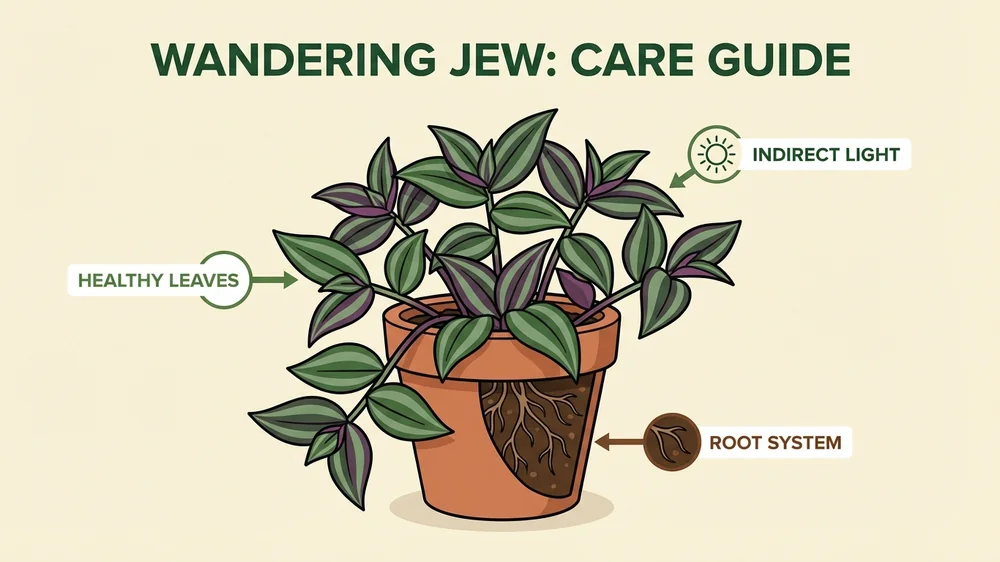
Figuring out exactly how to meet wandering jew light requirements was one of our earliest indoor plant challenges. We quickly learned that giving this striking plant the right amount of light is the difference between deep purple stripes and sad, faded leaves.
So, how much light does it actually need? To keep a Wandering Jew looking its absolute best, it needs bright, indirect sunlight for at least six to eight hours a day. We will show you exactly how to measure those tradescantia light needs in your own space.
When we first brought a Tradescantia zebrina into our east-facing apartment in Aarhus, we placed it entirely too far from the window. Within weeks, the beautiful metallic purple faded to a dull, flat green. The stems were stretching out, desperately looking for a better spot.
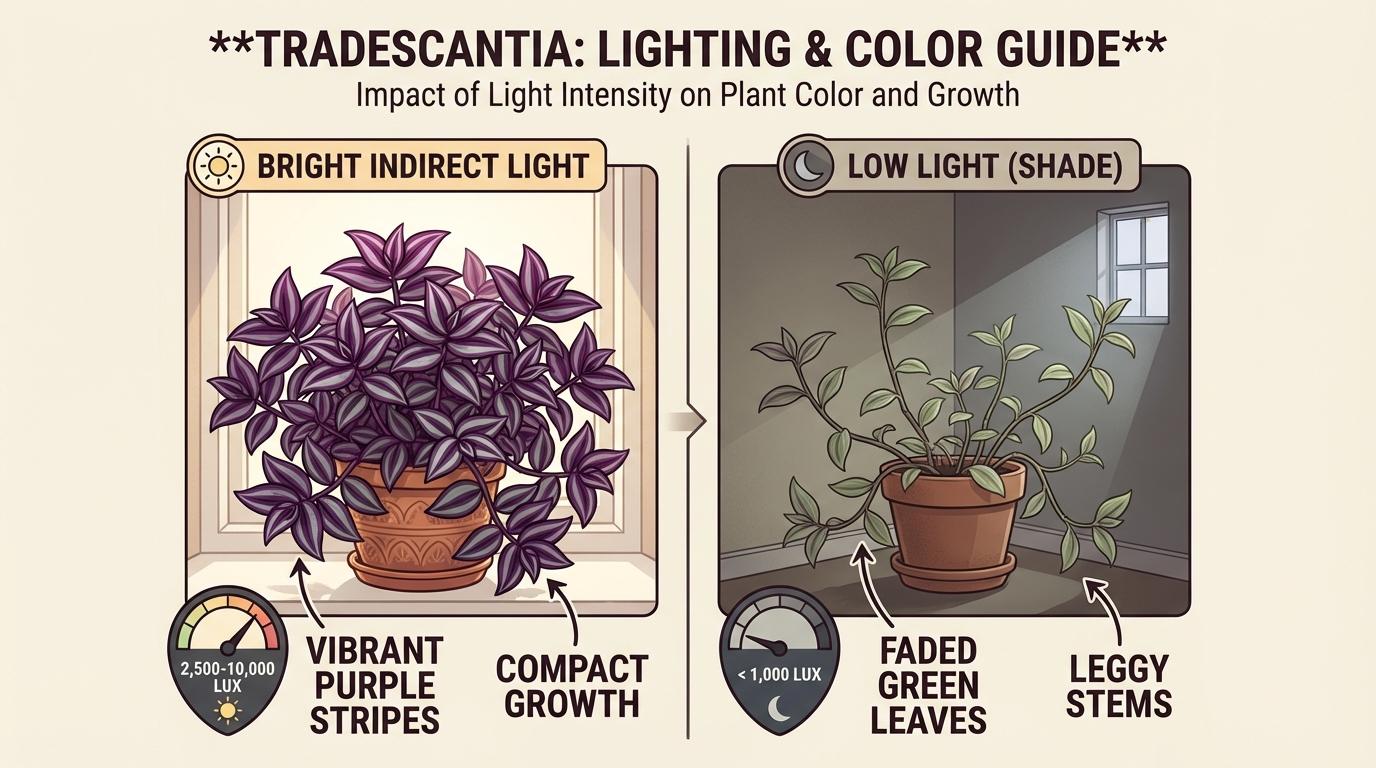
Joakim cross-referenced botanical garden archives and used a meter to realize our gloomy Danish winters were providing less than 1,000 lux. That is far too low for proper wandering jew light requirements care. The plant simply stops producing anthocyanins, which are the pigments responsible for those purple hues.
When you are indoors growing wandering jew light requirements must hit between 2,500 and 10,000 lux for optimal color. We moved our plant directly to the windowsill and added a cheap grow bulb. Meeting these healthy wandering jew light requirements completely restored its deep stripes in just a few weeks.
📚 Want to learn more about Wandering Jew?
Read our deep-dive guide: Wandering Jew Care Guide
How Light Affects Leaf Color and Variegation
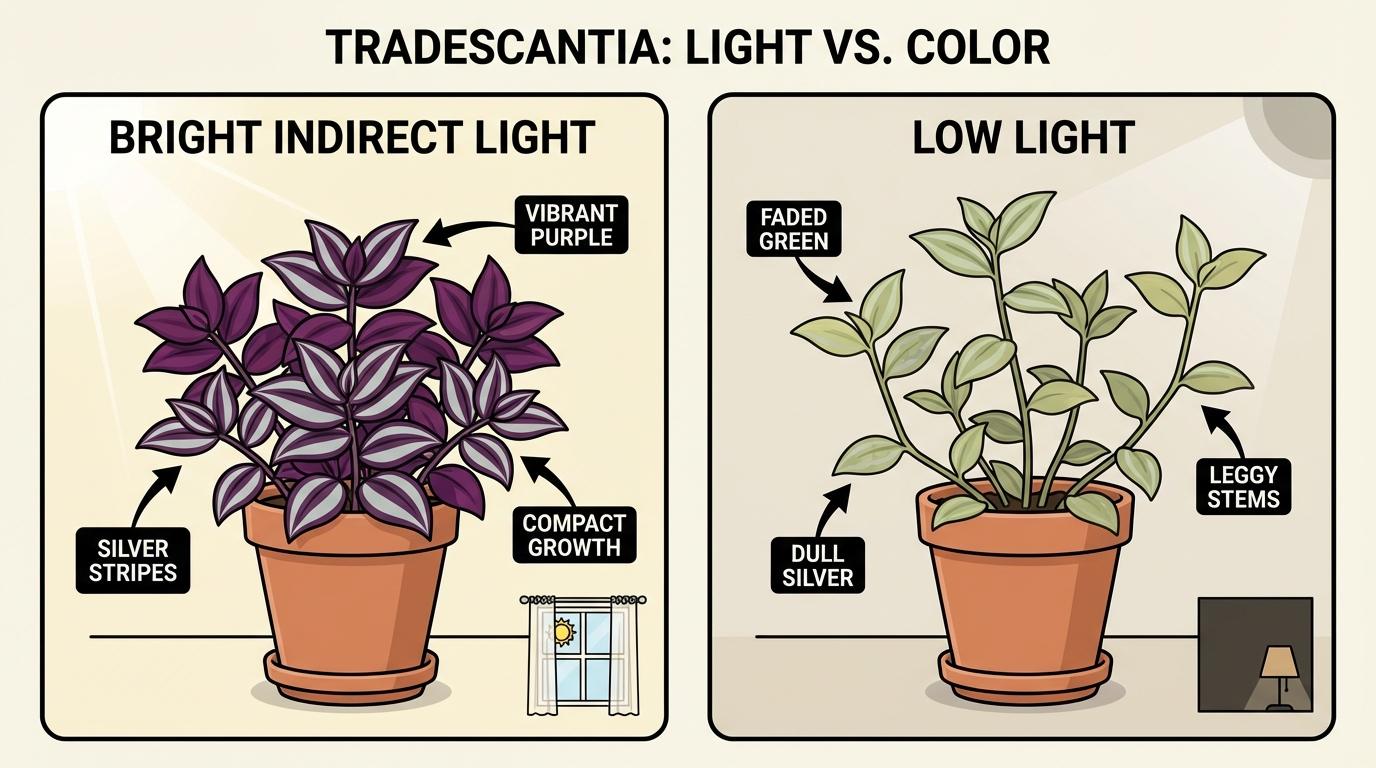
If you notice your Wandering Jew fading to a plain green, it is almost always an illumination issue. When treating a wandering jew losing color light is the very first thing we check. The plant simply stops producing its protective purple pigments in the dark.
We saw this firsthand during our first winter in Aarhus. The sun barely rises above the horizon, and our apartment gets very little natural light. Within weeks, the beautiful silver and purple stripes on our plant vanished completely.
Joakim dug into the biology behind this by checking botanical garden archives. The purple color comes from anthocyanins, which act like a natural sunscreen. Proper wandering jew losing color light care means providing enough brightness so the plant actually needs to build up that colorful protection.
When you are growing wandering jew losing color light issues are thankfully easy to fix. We moved our faded plant directly onto our brightest windowsill. Once we met its proper tradescantia light needs, the new growth emerged completely purple again.
To maintain a healthy wandering jew losing color light should never be ignored. You just need to adjust its position to fix the fade. Meeting basic wandering jew light requirements ensures the plant keeps its striking metallic look all year long.
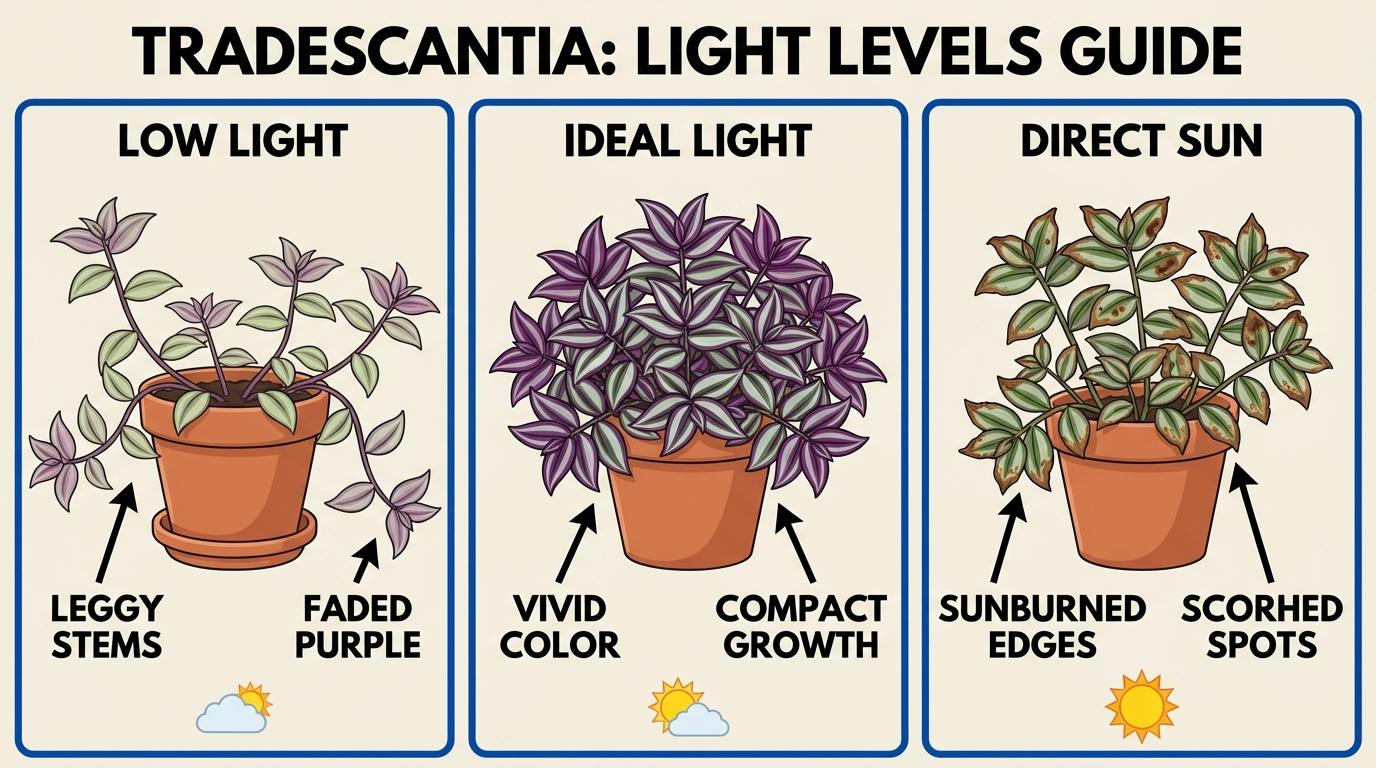
You just have to watch out for the extreme opposite. While wandering jew light levels need to be high, direct afternoon sun baking through a window can scorch the leaves. We stick to bright morning sun and rely on a simple grow bulb during the darkest Danish months.
📚 Want to learn more about Wandering Jew light?
Read our deep-dive guide: Wandering Jew light Guide
Best Window Placement by Direction
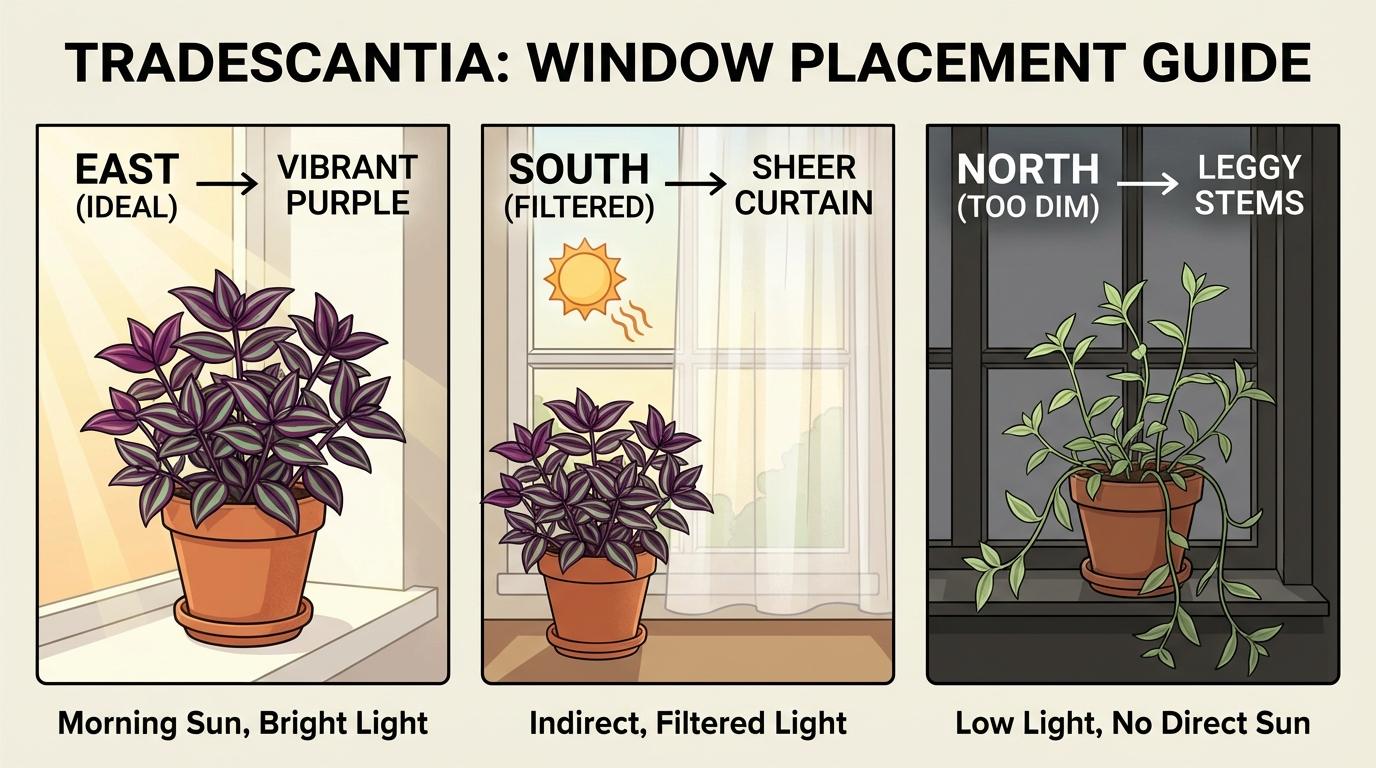
Figuring out the ideal wandering jew window placement makes a massive difference in how colorful your plant looks. We have moved our pots around nearly every room to see how they react. Finding the right spot balances bright exposure with protection from harsh heat.
East-Facing Windows: The Sweet Spot
When considering a growing wandering jew window placement, an east-facing room is our absolute favorite recommendation. The morning sun provides gentle, direct rays that boost the purple pigments. This perfectly meets your Wandering Jew plant’s needs without risking burnt leaves.
Our main plant sits right on an eastern windowsill in our apartment. It soaks up the early sun but stays protected during the hottest parts of the day. This spot makes satisfying its light requirements incredibly easy.
South and West-Facing Windows: Watch the Heat
South and west windows offer intense afternoon sunlight that can be tricky. Proper wandering jew window placement care in these rooms means pulling the pot back a few feet. You want to avoid the magnifying glass effect that severely heats up the windowpane.
If you leave the plant directly in the midday sun, the leaves will quickly turn brown and crispy. According to botanical garden data, this plant prefers bright but filtered conditions. We suggest hanging a sheer curtain to diffuse the intense rays and safely meet its tradescantia light needs.
North-Facing Windows: Not Enough
North-facing windows are usually too dim to support a healthy wandering jew window placement. In our Aarhus apartment, the northern exposure drops dangerously low during the winter. Your plant will survive, but it will quickly stretch out and turn flat green.
If north is your only option indoors, you will need to supplement the space with a grow bulb. Relying purely on dim northern shadows will not provide enough wandering jew light. The stems will simply grow too weak to support themselves.
Can Wandering Jew Survive in Low Light?
Yes, it can survive, but a wandering jew low light setup comes with major drawbacks. It will look completely different and quickly lose its signature metallic colors.
We tried growing wandering jew low light in a dim corner of our Aarhus apartment. The plant did not die, but the stems grew incredibly long and fragile as they desperately reached for a window.
Joakim measured the space and saw it barely hit 500 lux. According to botanical records, these trailing vines need significantly more energy. If you ignore proper wandering jew light requirements, the plant simply stops producing its purple protective pigments.
For realistic wandering jew low light care, you must adjust your expectations. Your Wandering Jew will survive as a solid green, stretched-out vine. However, maintaining a tightly compact, healthy wandering jew low light specimen is nearly impossible.
To satisfy actual tradescantia light needs, you have to move the pot closer to a natural source. If you keep your wandering jew light starved for too long, you will eventually end up with entirely bald stems near the soil.
📚 Want to learn more about Wandering Jew?
Read our deep-dive guide: Wandering Jew Care Guide
Signs Your Wandering Jew Needs More Light
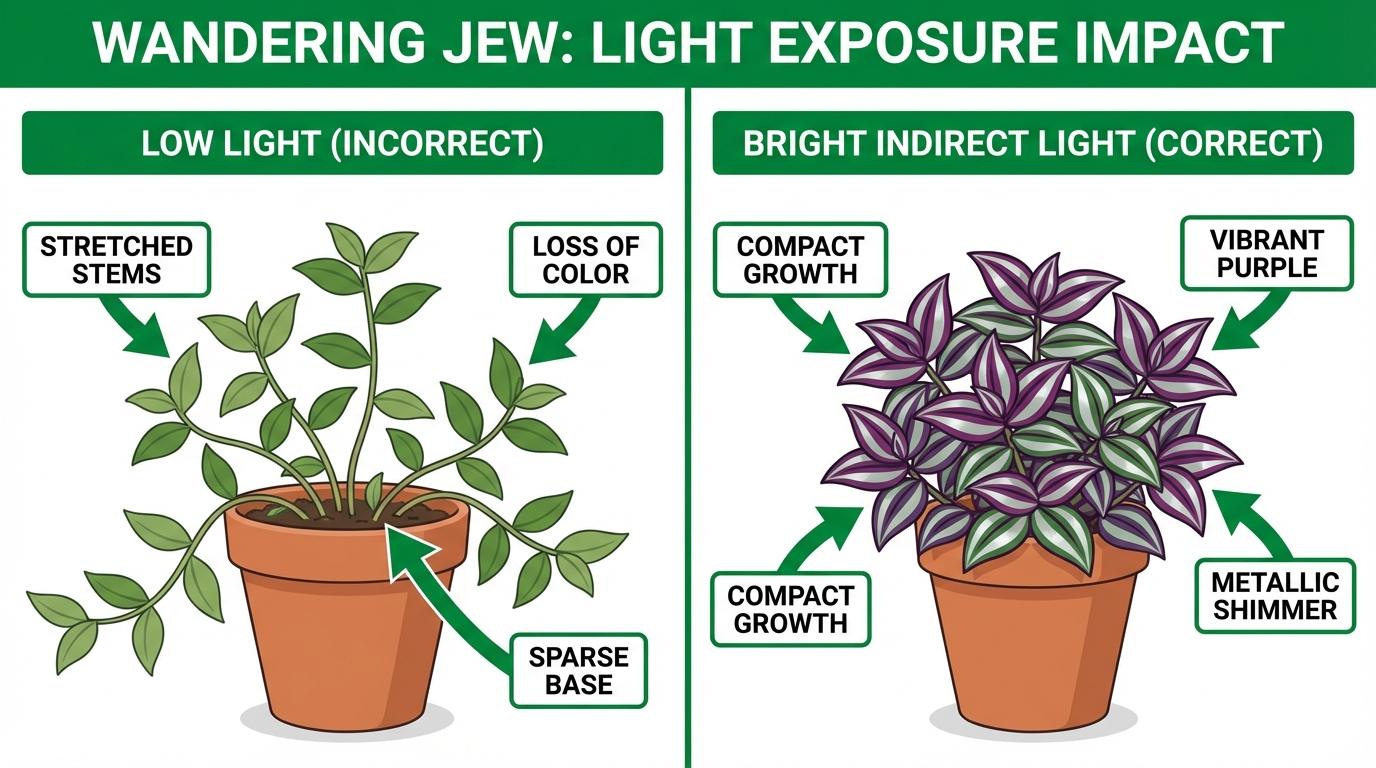
The most obvious signal of poor conditions is wandering jew leggy stretching along the stems. When we kept our Wandering Jew too far from the window, it produced long, bare vines with huge gaps between the leaves.
When you are growing wandering jew leggy stretching is a direct physical response to darkness. Joakim checked the botanical garden archives, confirming the plant stretches its stems rapidly just to hunt for better light.
The scientific term is etiolation, but Emilie just calls it a sad, bald plant. To stop this stretching, you must meet proper wandering jew light requirements by immediately moving the pot to a brighter windowsill.
You cannot reverse the bare stems that have already grown. Proper wandering jew leggy stretching care involves taking sharp scissors, pruning the bald vines back, and significantly improving your overall wandering jew light.
Once you actually meet its tradescantia light needs, the newest growth will emerge completely tight and compact. If you are keeping it indoors during a gloomy Danish winter, adding a simple LED bulb works wonders.
When maintaining a healthy wandering jew leggy stretching should never happen if your window is bright enough. As long as you provide enough daily energy, the leaves will stay closely packed and beautifully colored.
📚 Want to learn more about Wandering Jew?
Read our deep-dive guide: Wandering Jew Care Guide
Too Much Direct Sun: Burn Signs and Fixes
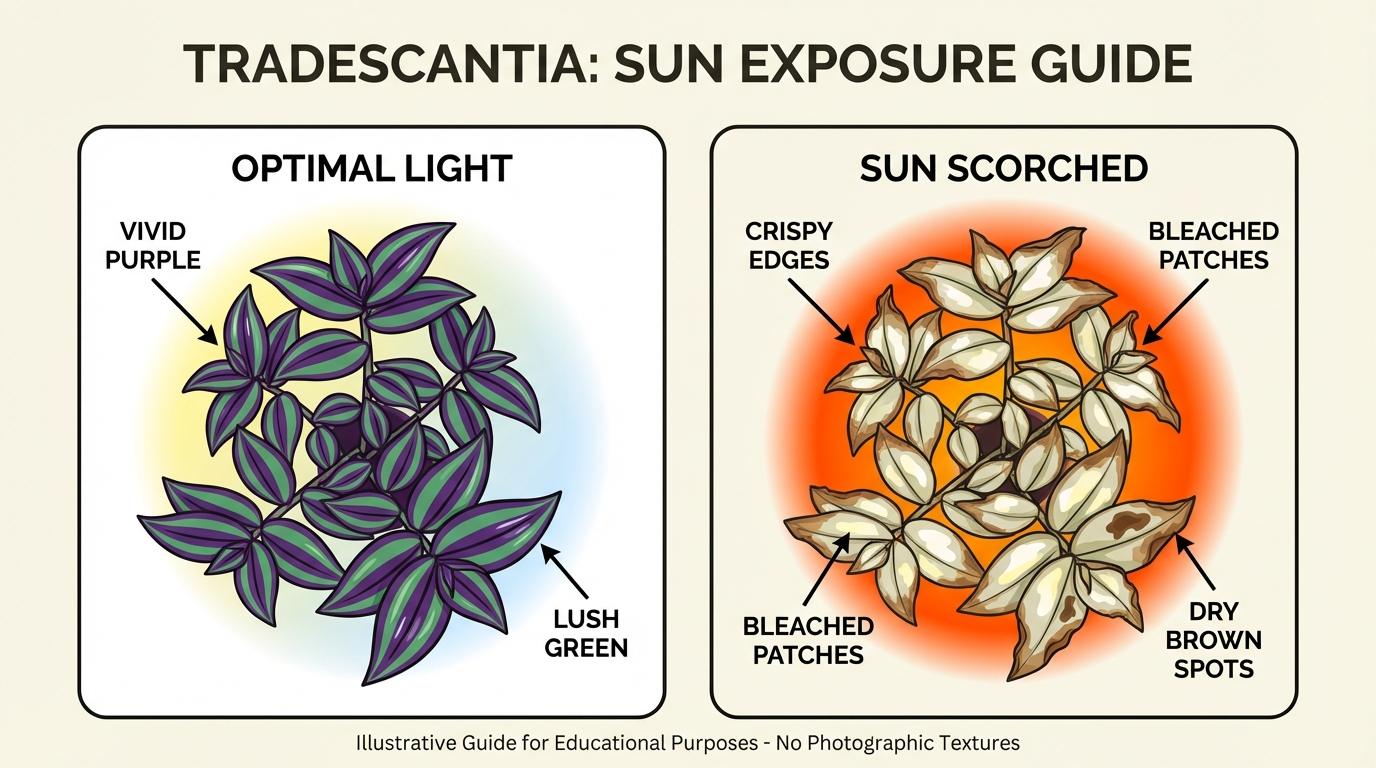
While they love bright conditions, wandering jew sunburn leaves are a common problem if you place the pot in harsh, direct midday rays. We learned this the hard way during a rare sunny July week here in Aarhus.
Emilie noticed the edges of our plant were turning crispy and bleached. When you are growing wandering jew sunburn leaves usually appear as dry, brown patches that crack when touched. The delicate leaves simply bake under the intense heat.
Joakim checked the botanical data, which confirms the Wandering Jew needs protection from intense afternoon rays. Proper light exposure means finding a balance so you do not fry the plant. Understanding your actual wandering jew light requirements prevents this damage entirely.
To maintain a healthy wandering jew sunburn leaves must be snipped off with clean scissors. You cannot heal the scorched tissue. It is best to remove it so the plant can redirect its energy into fresh growth.
To fix the core issue when keeping it indoors, pull the pot back slightly from south-facing windows. Proper wandering jew sunburn leaves care involves hanging a sheer curtain to diffuse the intense rays. This easily meets its tradescantia light needs without risking heat damage.
Getting your wandering jew light levels just right takes a little trial and error. Just remember that gentle morning sun is completely fine. You only need to protect the vines from aggressive midday and afternoon heat.
Using Grow Lights for Wandering Jew
When you use grow lights wandering jew indoor setups become essential during our long, dark Danish winters. The sun barely rises above the horizon in Aarhus, meaning natural window energy drops far below the survival threshold for these colorful trailing plants.
If you are keeping them indoors, you will quickly learn that standard room lighting is useless. Joakim measured our living room ceiling fixtures at a mere 200 lux, which completely starves the plant.
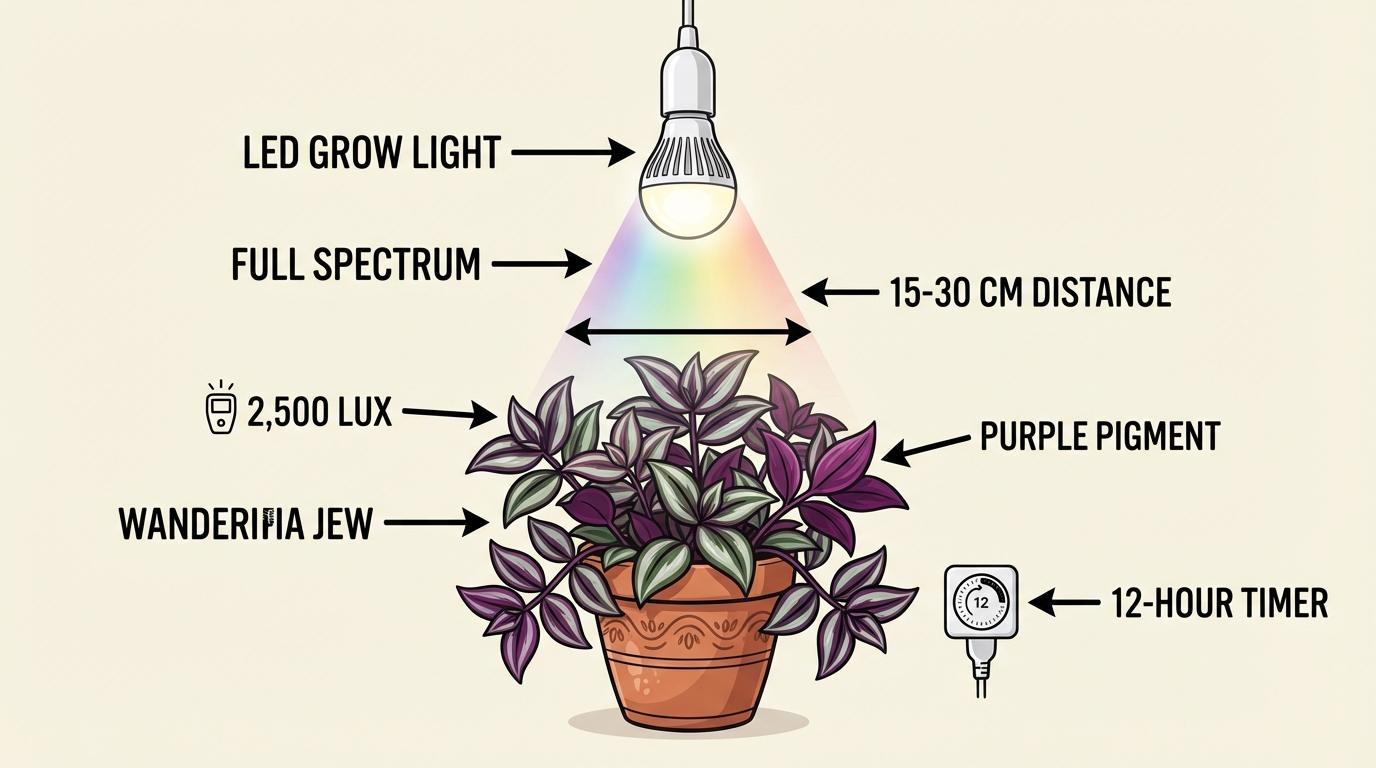
To meet proper wandering jew light requirements, you need a dedicated LED bulb. We aim for at least 2,500 lux directly on the leaves to ensure the Wandering Jew keeps producing its protective purple pigments.
According to botanical garden records, these trailing vines tolerate low energy but thrive in bright conditions. Mastering proper grow lights wandering jew indoor care simply mimics that intense tropical sun right in your living room.
Setting Up Your Artificial Light
Emilie prefers cheap, full-spectrum LED bulbs that screw directly into regular floor lamp fixtures. We position the bulb about 15 to 30 centimeters above the top leaves to provide adequate wandering jew light without looking ugly.
If you place the bulb too far away, the energy dissipates before reaching the foliage. A healthy grow lights wandering jew indoor setup requires keeping the bulb close enough to hit the leaves directly without burning them.
We run our lamps for about 12 hours a day on a basic mechanical timer. This consistent schedule easily satisfies daily tradescantia light needs without us having to remember to flip a switch every morning.
Winter Watering Adjustments
When you are growing grow lights wandering jew indoor specimens, you will definitely notice the soil dries out faster. The artificial energy combined with winter central heating drops the ambient humidity in our apartment rapidly.
Just keep a close eye on the topsoil and check it frequently with your finger. As long as your watering routine keeps pace with the extra energy, your stems will stay beautifully tight and purple until spring.
📚 Want to learn more about Wandering Jew?
Read our deep-dive guide: Wandering Jew Care Guide
Seasonal Light Adjustments
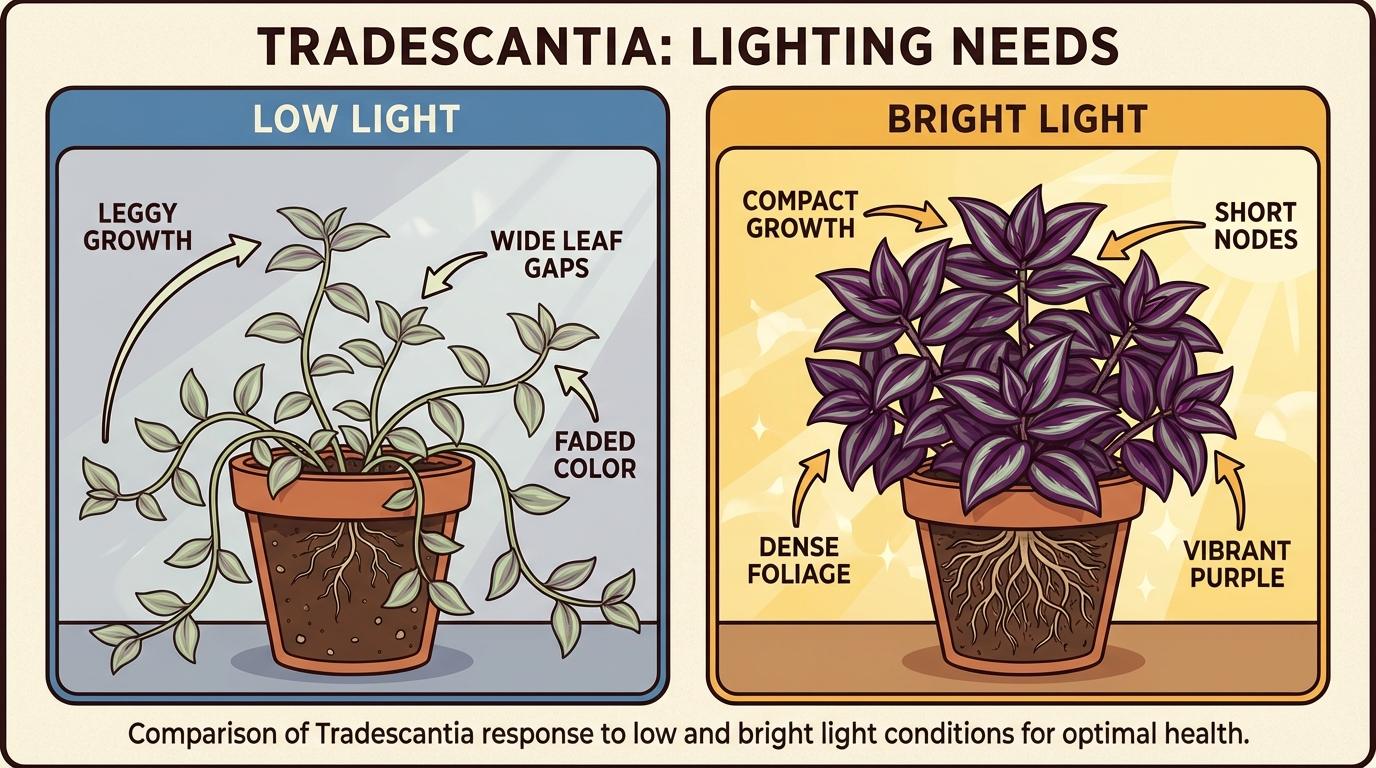
Navigating wandering jew winter light changes is our biggest challenge in Aarhus. When November hits, the sun practically disappears, and our apartment windows barely let in any usable energy.
Joakim relies on botanical garden data to track this shift. The natural light drops far below the required 2,500 lux, causing the metallic purple leaves to quickly fade to dull green.
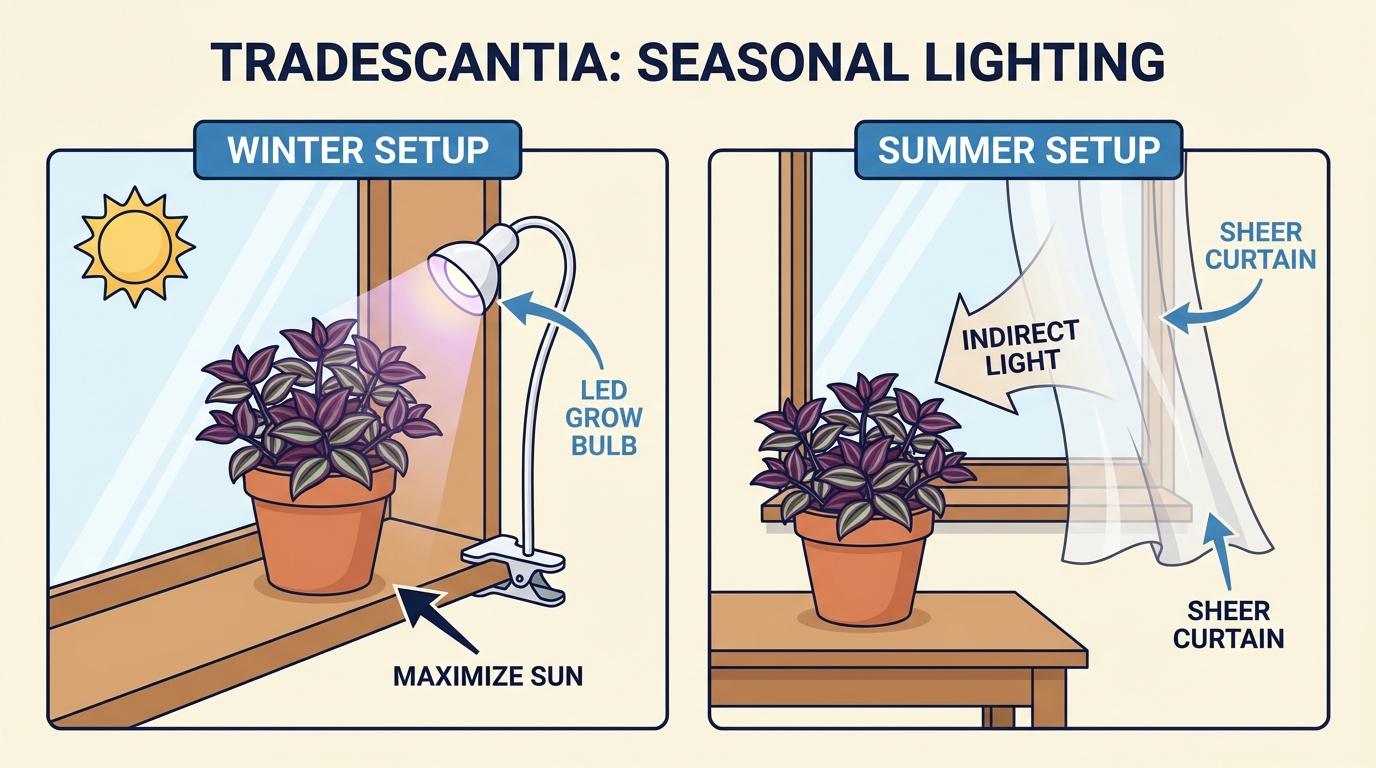
For proper wandering jew winter light care, Emilie physically moves our pots to the absolute brightest south-facing windowsills. You have to maximize every single hour of weak sunshine.
Beating the Winter Gloom
Even right against the glass, sometimes the natural sunshine is just not enough. If you ignore proper wandering jew light requirements, your Wandering Jew will stretch out into long, bald vines.
When growing wandering jew winter light deficits are easily solved with a basic LED grow bulb. We plug a simple lamp into a mechanical timer to guarantee 12 hours of steady energy.
Keeping a healthy wandering jew winter light setup indoors simply means balancing artificial and natural sources. The extra bulb ensures the plant keeps its tight growth and deep purple stripes until spring.
Summer Sun Shifting
When summer finally arrives, you have to reverse your strategy. While wandering jew light levels must stay high, the intense July afternoon sun will actually scorch the leaves right through the glass.
To meet its tradescantia light needs safely, we pull the pots back a few feet from our south-facing windows. A sheer curtain also works perfectly to diffuse the harsh midday rays.
📚 Want to learn more about Wandering Jew light?
Read our deep-dive guide: Wandering Jew light Guide
Outdoor Light Requirements
When the Danish summer finally arrives, taking your Wandering Jew outside can trigger massive growth. However, finding the right wandering jew outdoor sun shade balance is absolutely critical. If you guess wrong, you will either fry the leaves or lose those beautiful purple stripes.
Outside, the intensity of the sun is drastically higher than inside your apartment. Proper wandering jew light requirements mean providing bright ambient morning sun while actively blocking harsh afternoon rays. The delicate foliage simply cannot handle direct, midday baking.
Finding the Perfect Spot
On our small Aarhus balcony, we spent a few weeks moving pots around to figure this out. A healthy wandering jew outdoor sun shade setup usually means an east-facing wall. This gives the plant direct energy at dawn but protects it when temperatures peak.
If you only have a south-facing patio, you must place the pot under a canopy or behind larger plants. Dappled sunlight perfectly satisfies actual tradescantia light needs. It mimics their natural environment crawling along the forest floor beneath taller trees.
Acclimating Your Plant
You cannot just take a plant from your living room and throw it into the direct wind and sun. When growing wandering jew outdoor sun shade environments, you must introduce the new climate slowly over a week. Plant shock is a very real danger.
Start by placing the pot in total shade for two days, then slowly inch it into the morning sun. According to botanical garden records, sudden shifts in exposure will severely scorch the leaves. Proper wandering jew outdoor sun shade care requires this gradual hardening off.
Finally, remember that outdoor air flow dries soil out extremely fast. Because the plant receives significantly more wandering jew light outside than it does indoors, you will need to check the soil moisture daily.
📚 Want to learn more about Wandering Jew Light Requirements?
Read our deep-dive guide: Wandering Jew Light Requirements Guide
Common Questions About Wandering Jew Light Requirements
What is the legend of the Wandering Jew?
The Wandering Jew is a mythical figure from medieval Christian folklore. According to the legend, he was a Jewish man who mocked or struck Jesus on the way to the Crucifixion and was cursed to walk the Earth immortally until the Second Coming.
Is the Wandering Jew mentioned in the Bible?
No, the legend of the Wandering Jew is not in the Bible. It is a fabricated folklore tale that borrows some biblical elements, but there is no biblical record of anyone being cursed to wander the earth immortally for mistreating Jesus.
Why is the Tradescantia zebrina plant called the Wandering Jew?
The plant earned the nickname ‘Wandering Jew’ due to its creeping, rapid-growth habit and tendency to easily root and spread or ‘wander’ across the soil. The name alludes directly to the medieval Christian folklore figure doomed to wander the earth indefinitely.
Is the plant name Wandering Jew considered offensive?
Yes, the term is increasingly considered offensive and antisemitic. The folklore it originates from was historically used to promote anti-Jewish sentiment and paint Jewish people in a negative light, a concept later exploited by Nazi propaganda.
What are the alternative or new names for the Wandering Jew plant?
Due to the controversial history of the original name, plant enthusiasts and botanists now commonly refer to the plant by its scientific name, Tradescantia zebrina, or by alternative common names such as the Wandering Dude, Inch Plant, or Spiderwort.
How do you care for an indoor Tradescantia zebrina (Inch Plant)?
The plant thrives in bright, indirect sunlight and prefers slightly moist, well-draining soil. You should water it when the top half-inch of soil feels dry, typically once a week, and maintain moderate to high humidity to keep its foliage vibrant.
Is the Wandering Jew plant toxic to cats and dogs?
Yes, the plant is mildly toxic to pets. The sap in the stems and leaves can cause mouth soreness, stomach irritation, and dermatitis-like skin irritation if ingested or brushed against by cats and dogs.
Why are my Wandering Jew plant’s leaves turning yellow?
Yellowing leaves, particularly at the base of the plant, are most commonly a sign of overwatering and poor drainage, which can lead to root rot. It can also occasionally indicate a lack of sufficient lighting.
Why is my Wandering Jew plant losing its purple color?
Faded, dull, or purely green leaves indicate that the plant is not receiving enough light. Tradescantia zebrina requires bright, indirect sunlight to develop and maintain its signature vibrant purple and silver stripes.
Can a Wandering Jew plant grow outdoors?
Yes, they can grow outdoors in mild, frost-free climates (USDA hardiness zones 9-11). However, they are sensitive to freezing temperatures and can become highly invasive in certain regions if not contained, due to their rapid vegetative propagation.
How do you propagate a Wandering Jew plant?
Propagation is very easy and can be done via stem cuttings. Simply snip a piece of the stem with a few leaves, remove the bottom leaves, and place the cutting either directly into moist soil or in a glass of water until roots develop.
What is the origin of the Wandering Jew myth?
While early Christian writers made analogies about Jewish exile, the specific legend of the Wandering Jew first gained widespread popularity in a 1602 German pamphlet about a shoemaker named Ahasuerus. The earliest recorded versions date back to the 13th century, such as an account by Roger of Wendover in 1228.
What are the common pests that affect the Wandering Jew plant?
While generally resilient, Tradescantia zebrina can occasionally attract common houseplant pests such as spider mites, aphids, and mealybugs. These can usually be managed by isolating the plant and treating the leaves with insecticidal soap or neem oil.
Does the Wandering Jew plant need fertilizer?
The plant does not strictly require fertilizer, but it benefits from occasional feeding during its active growing season (spring and summer). It is recommended to use a diluted, organic liquid fertilizer, avoiding feeding during the fall and winter months.