
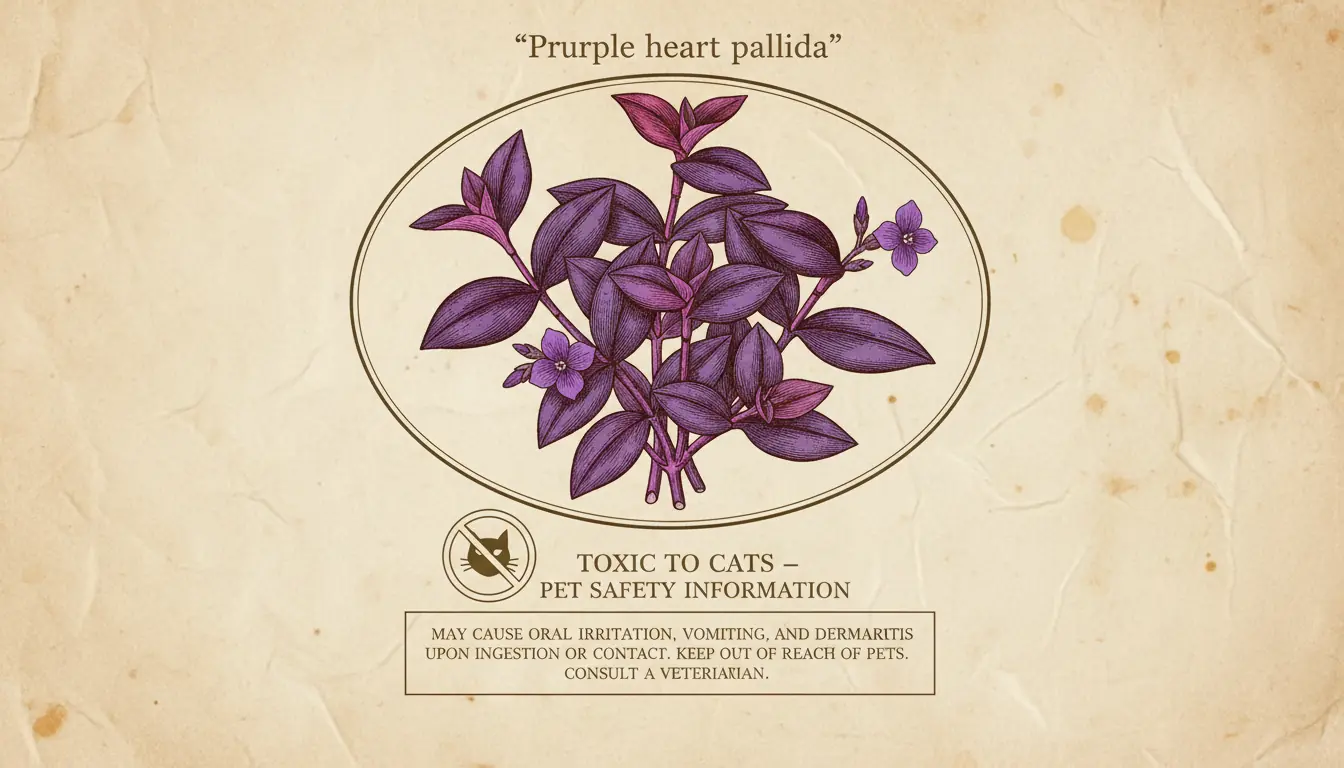
Purple Heart Plant Toxic to Cats: Complete Pet Safety Guide
If you’re wondering whether purple heart plant toxic to cats is a concern, the short answer is yes—purple heart plants (Tradescantia pallida) are mildly toxic to cats and dogs. We understand the worry that comes with discovering this information, especially if your curious cat has already nibbled on your beautiful purple plant. The good news is that while toxic, purple heart plants are not severely poisonous, and most pets recover fully with no treatment needed.
We’ve helped countless plant-loving pet owners navigate the balance between keeping gorgeous houseplants and ensuring their furry family members stay safe. The key is understanding what “mildly toxic” really means, recognizing symptoms if ingestion occurs, knowing when veterinary care is necessary, and implementing smart placement strategies that let you enjoy your plants while keeping pets safe.
In this comprehensive guide, we’ll explain exactly what makes purple heart plants toxic, what happens if your cat or dog eats it, how to respond if ingestion occurs, safe placement strategies, and excellent pet-friendly alternative plants if you decide purple heart isn’t worth the risk in your home.
For complete plant care information, see our purple heart plant care guide.
Is Purple Heart Plant Toxic to Cats and Dogs?
Yes, purple heart plants are toxic to both cats and dogs, though they’re classified as mildly toxic rather than severely poisonous.
What Makes Purple Heart Toxic
Purple heart plants contain calcium oxalate crystals, which are tiny, needle-shaped crystals that cause irritation when they come in contact with soft tissues like the mouth, tongue, throat, and digestive tract. These crystals are the plant’s natural defense mechanism against being eaten by animals.
When a cat or dog bites into the plant, thousands of these microscopic crystals are released, causing immediate burning and irritation. It’s similar to getting hundreds of tiny splinters in your mouth—extremely uncomfortable but not usually life-threatening.
Toxicity Level: What “Mildly Toxic” Means
Is purple heart plant toxic to cats in a dangerous way? The toxicity is considered mild to moderate. This means:
- Most pets experience only minor symptoms that resolve on their own within 24 hours
- Serious complications are rare and typically only occur with large quantities ingested
- Fatalities are extremely uncommon
- Treatment is usually supportive rather than emergency intervention
However, “mildly toxic” doesn’t mean “safe.” Pets can still experience significant discomfort, and individual reactions vary based on the amount consumed, the pet’s size, and individual sensitivity.
Symptoms of Purple Heart Plant Ingestion
Recognizing symptoms quickly helps you respond appropriately.
Immediate Symptoms (Within Minutes)
The calcium oxalate crystals cause instant irritation, so symptoms appear very quickly after ingestion:
- Oral irritation: Pawing at the mouth, excessive drooling, visible discomfort
- Mouth inflammation: Redness and swelling of lips, tongue, and mouth tissues
- Difficulty swallowing: Due to throat irritation and swelling
- Loss of appetite: Refusal to eat or drink due to mouth pain
Digestive Symptoms (Within Hours)
If the plant material reaches the stomach, additional symptoms may develop:
- Vomiting: May contain plant material
- Diarrhea: Usually mild
- Excessive salivation: Continues as the body tries to flush out irritants
- Decreased appetite: May last 12-24 hours
Rare Severe Symptoms
These symptoms are uncommon but require immediate veterinary attention:
- Difficulty breathing or swallowing due to severe throat swelling
- Tremors or muscle spasms
- Changes in heart rate
- Severe, persistent vomiting or diarrhea leading to dehydration
What to Do If Your Cat Eats Purple Heart Plant
Quick, calm action is important if you catch your pet eating purple heart.
Immediate Steps
Step 1: Remove Plant Material
Gently remove any remaining plant material from your pet’s mouth. Wear gloves if possible, as the sap can irritate human skin too.
Step 2: Rinse the Mouth
If your pet tolerates it, gently rinse their mouth with cool water to help flush out calcium oxalate crystals. Don’t force this if it causes stress.
Step 3: Offer Water or Milk
Encourage your pet to drink water or a small amount of milk. Milk can help neutralize some of the irritation. Don’t force liquids, just make them available.
Step 4: Monitor Closely
Watch your pet for the next 24 hours, noting any symptoms and their severity.
When to Call Your Veterinarian
Contact your vet if:
- Symptoms are severe (difficulty breathing, extreme lethargy)
- Your pet is very small (kittens, small breed dogs are at higher risk)
- A large amount of plant was consumed
- Symptoms persist beyond 24 hours
- You’re unsure or concerned for any reason
You can also call the ASPCA Animal Poison Control Center (888-426-4435) or Pet Poison Helpline (855-764-7661) for professional advice. Note that these services may charge a consultation fee.
What Your Vet May Recommend
For mild cases, vets typically recommend monitoring at home with supportive care. For more concerning cases, treatment may include:
- Anti-inflammatory medication to reduce mouth and throat swelling
- Pain medication for comfort
- Anti-nausea medication if vomiting is severe
- IV fluids if dehydration develops
- Soft food or liquid diet for 24-48 hours while the mouth heals
Safe Placement Strategies for Pet Households
You can keep purple heart plants and pets in the same home with smart placement strategies.
High Placement Options
Hanging baskets: Purple heart plants are naturally trailing, making them perfect for hanging baskets mounted well above pet reach. Ensure the basket is secure and won’t fall if a cat climbs nearby furniture.
High shelves: Place on shelves at least 5-6 feet (1.5-1.8 m) high where cats can’t jump. Ensure the shelf is stable and the plant pot can’t be knocked off.
Plant stands: Tall plant stands (4-5 feet/120-150 cm) work well, especially for dogs who can’t jump. For cats, combine with other deterrents.
Room Restriction
Dedicated plant rooms: Keep all toxic plants in a room that pets don’t access, such as a home office, guest room, or sunroom with a door that stays closed.
Outdoor only: In zones 7-11, keep purple heart as an outdoor plant only, limiting pet exposure to supervised outdoor time.
Deterrents and Barriers
Citrus sprays: Cats dislike citrus scents. Spray citrus-scented deterrents on the pot rim (not on the plant itself) to discourage investigation.
Double-sided tape: Place on surfaces around the plant. Cats hate the sticky feeling and will avoid the area.
Physical barriers: Use decorative plant cages or cloches that allow the plant to grow while preventing direct pet access.
Training and Behavior Management
Teaching pets to avoid plants reduces risk in multi-plant households.
For Cats
Provide cat grass or catnip as safe alternatives for cats who like to chew plants. This redirects the behavior to appropriate options.
Use positive reinforcement when cats ignore plants and gentle redirection when they show interest. Avoid punishment, which increases stress and can backfire.
For Dogs
Train the “leave it” command specifically for plants. Practice with safe plants first, rewarding when your dog ignores them on command.
Ensure dogs have appropriate chew toys and adequate mental stimulation to reduce boredom-driven plant chewing.
Pet-Friendly Alternative Plants
If you decide the risk isn’t worth it, these beautiful alternatives are safe for cats and dogs.
Similar Trailing Plants
String of Hearts (Ceropegia woodii): Non-toxic with trailing vines and heart-shaped leaves. Similar aesthetic to purple heart’s trailing growth. For care information, see our string of hearts care guide.
Peperomia varieties: Many peperomias are pet-safe with interesting foliage colors and patterns. Relatively low-maintenance.
Colorful Pet-Safe Options
Prayer Plant (Maranta): Stunning variegated foliage with pink, red, and green patterns. Safe for pets and tolerates lower light.
Calathea varieties: Dramatic patterned leaves in purples, pinks, and greens. Non-toxic and adds color without risk.
Spider Plant (Chlorophytum comosum): Variegated green and white foliage, produces trailing babies. Completely safe for cats and dogs.
For Outdoor Gardens
Marigolds: Bright, colorful flowers that are pet-safe. Annual in most zones.
Petunias: Vibrant colors, trailing varieties available. Safe for pets.
Snapdragons: Tall, colorful flower spikes. Non-toxic to cats and dogs.
Other Tradescantia Species Toxicity
Purple heart (Tradescantia pallida) is part of a larger family, and most Tradescantia species are similarly toxic.
Wandering Jew Plants
Wandering Jew (Tradescantia zebrina and related species) contains the same calcium oxalate crystals and causes identical symptoms. All precautions for purple heart apply equally to wandering jew plants.
For more information, see our wandering jew plant toxic to cats guide.
Other Common Toxic Houseplants
If you’re evaluating plant safety, be aware these popular houseplants are also toxic:
- Pothos (all varieties)
- Philodendron (all species)
- Monstera deliciosa
- Snake plants
- ZZ plant
- Dieffenbachia
The ASPCA maintains a comprehensive database of toxic and non-toxic plants at aspca.org/pet-care/animal-poison-control/toxic-and-non-toxic-plants.
Why Cats and Dogs Eat Plants
Understanding why pets chew plants helps prevent future incidents.
Common Reasons
Boredom: Understimulated pets may chew plants for entertainment. Increase playtime and provide interactive toys.
Digestive upset: Cats especially may eat plants to induce vomiting when feeling nauseous. If this is frequent, consult your vet about digestive issues.
Nutritional deficiency: Rarely, plant eating indicates missing nutrients. A vet can evaluate and recommend diet changes if needed.
Curiosity: Young pets explore the world with their mouths. This typically decreases with age.
Taste or texture: Some pets simply find certain plants appealing to chew.
Common Questions About Purple Heart Plant Toxic To Cats
Is purple heart plant toxic to cats?
Yes, purple heart plants (Tradescantia pallida) are toxic to cats. They contain calcium oxalate crystals that cause mouth irritation, drooling, vomiting, and difficulty swallowing if ingested. The toxicity is considered mild to moderate—most cats recover fully within 24 hours without treatment. However, contact your veterinarian if symptoms are severe or your cat consumed a large amount of the plant.
What happens if my cat eats purple heart plant?
If your cat eats purple heart plant, expect immediate oral irritation, excessive drooling, pawing at the mouth, and possible vomiting within hours. Remove any remaining plant material, rinse the mouth with water if tolerated, and monitor for 24 hours. Most cats recover without treatment. Contact your vet if symptoms are severe, persist beyond 24 hours, or if your cat is very small or consumed a large amount.
Is purple heart plant poisonous to dogs?
Yes, purple heart plants are poisonous to dogs with the same symptoms as cats—oral irritation, drooling, vomiting, and diarrhea from calcium oxalate crystals. Dogs typically experience mild symptoms that resolve within 24 hours. Larger dogs generally have milder reactions than small dogs due to body size. Contact your veterinarian if your dog shows difficulty breathing, severe symptoms, or consumed a large quantity of the plant.
Can purple heart plant kill cats?
Fatalities from purple heart plant ingestion are extremely rare. While the plant is toxic, the toxicity level is mild to moderate, and most cats recover fully with no treatment needed. Death would require consuming a very large amount of plant material, which is unlikely because the immediate mouth irritation discourages continued eating. However, always contact your vet if ingestion occurs, especially for kittens or cats with health issues.
How do I keep my cat away from purple heart plants?
Keep cats away from purple heart plants by using hanging baskets mounted high, placing plants on shelves 5-6 feet (1.5-1.8 m) tall, or keeping plants in rooms cats can’t access. Use citrus-scented deterrent sprays around (not on) the plant, provide cat grass as an alternative, and train with positive reinforcement. For persistent plant-chewers, consider switching to pet-safe plants like spider plants or string of hearts instead.
Are there pet-safe plants similar to purple heart?
Yes! String of Hearts (Ceropegia woodii) offers similar trailing growth and is completely non-toxic to cats and dogs. Spider plants provide colorful variegated foliage and are safe. For purple color, try pet-safe prayer plants or calatheas with purple-tinted foliage. Peperomia varieties offer diverse leaf shapes and colors without toxicity. These alternatives let you enjoy beautiful houseplants without pet safety concerns.
Should I get rid of my purple heart plant if I have cats?
Not necessarily. Many pet owners successfully keep mildly toxic plants with smart placement strategies—high shelves, hanging baskets, or rooms pets can’t access. Assess your specific situation: how curious is your cat, can you place plants completely out of reach, and are you comfortable with the risk? If your cat is a persistent plant-chewer or you can’t ensure inaccessible placement, switching to pet-safe alternatives may give you peace of mind.
The question “purple heart plant toxic to cats?” is important for responsible pet ownership, and now you have the complete picture. Yes, these beautiful plants are toxic, but with mild to moderate severity that’s manageable with awareness and smart strategies. Whether you choose to keep your purple heart with careful placement or switch to pet-safe alternatives, you can make an informed decision that works for your household.
Remember that the goal isn’t to eliminate all risk—that’s impossible in daily life—but to make informed choices and have a plan if ingestion occurs. Many cat households successfully maintain beautiful plant collections, including some mildly toxic species, by using strategic placement and providing safe alternatives for curious chewers.
Related Care Guides
- Purple Heart Plant Care: Complete Guide – Master all aspects of care
- Indoor Purple Heart Plant Guide – Safe indoor placement
- Wandering Jew Plant Toxic to Cats – Similar toxicity information
- String of Hearts Care – Pet-safe alternative
- Pothos Care – Another mildly toxic plant
Expert Resources & Further Reading
- ASPCA: Toxic and Non-Toxic Plants Database – Comprehensive plant toxicity list
- Wikipedia: Calcium Oxalate – Understanding the toxin
- Pet Poison Helpline – Emergency toxicity hotline