
Pothos Light Requirements: Complete Guide to Perfect Lighting
Pothos light requirements are often misunderstood, leading to either leggy, pale plants or scorched, stressed specimens. We've been growing pothos in every lighting condition imaginable over the years, from bright south-facing windows to dim office corners, and we've learned that understanding light is the key to unlocking these plants' true potential. When you get the lighting right, pothos transform from simple houseplants into stunning living sculptures that command attention and bring life to any space.
The beauty of pothos light needs lies in their incredible adaptability—these plants can survive in conditions that would kill many other houseplants, but they truly thrive when given the right amount and quality of light. Understanding the difference between surviving and thriving light conditions will help you create the perfect environment for your pothos to reach its full potential.
In this comprehensive guide, we'll walk you through everything you need to know about pothos lighting requirements, from the science behind plant photosynthesis to practical tips for optimizing light in your home. You'll learn how to read your plant's light signals, choose the perfect window placement, and even supplement with artificial lighting when natural light isn't enough.
Understanding Pothos Light Needs: The Science Behind Photosynthesis
Before diving into specific pothos light requirements, it's helpful to understand the science behind how these plants use light for growth and development. Pothos plants are naturally adapted to the filtered light conditions found in tropical rainforest understories, where they receive bright but indirect sunlight through the canopy above.
The key to successful pothos light needs lies in understanding that these plants need sufficient light intensity to drive photosynthesis without the stress of direct sunlight that can damage their leaves. In their natural habitat, pothos plants climb trees to reach better light conditions, developing larger leaves and more vigorous growth as they ascend toward the canopy.
Different pothos varieties have slightly different pothos lighting requirements based on their variegation patterns. Solid green varieties like jade pothos can tolerate lower light levels because they have more chlorophyll for photosynthesis, while heavily variegated varieties like marble queen need more light to maintain their patterns and prevent reversion to solid green.
Optimal Light Conditions for Pothos
Creating the perfect light environment for your pothos starts with understanding what "optimal" means for these adaptable plants. Pothos light requirements are surprisingly flexible, but there are specific conditions that will help your plant reach its full potential.
Bright, Indirect Light: The Gold Standard
For the best pothos light needs results, provide bright, indirect light for 6-8 hours daily. This means placing your plant near a window where it receives plenty of ambient light without direct sunbeams hitting the leaves. East or north-facing windows are ideal because they offer bright light without the intense heat of direct afternoon sun.
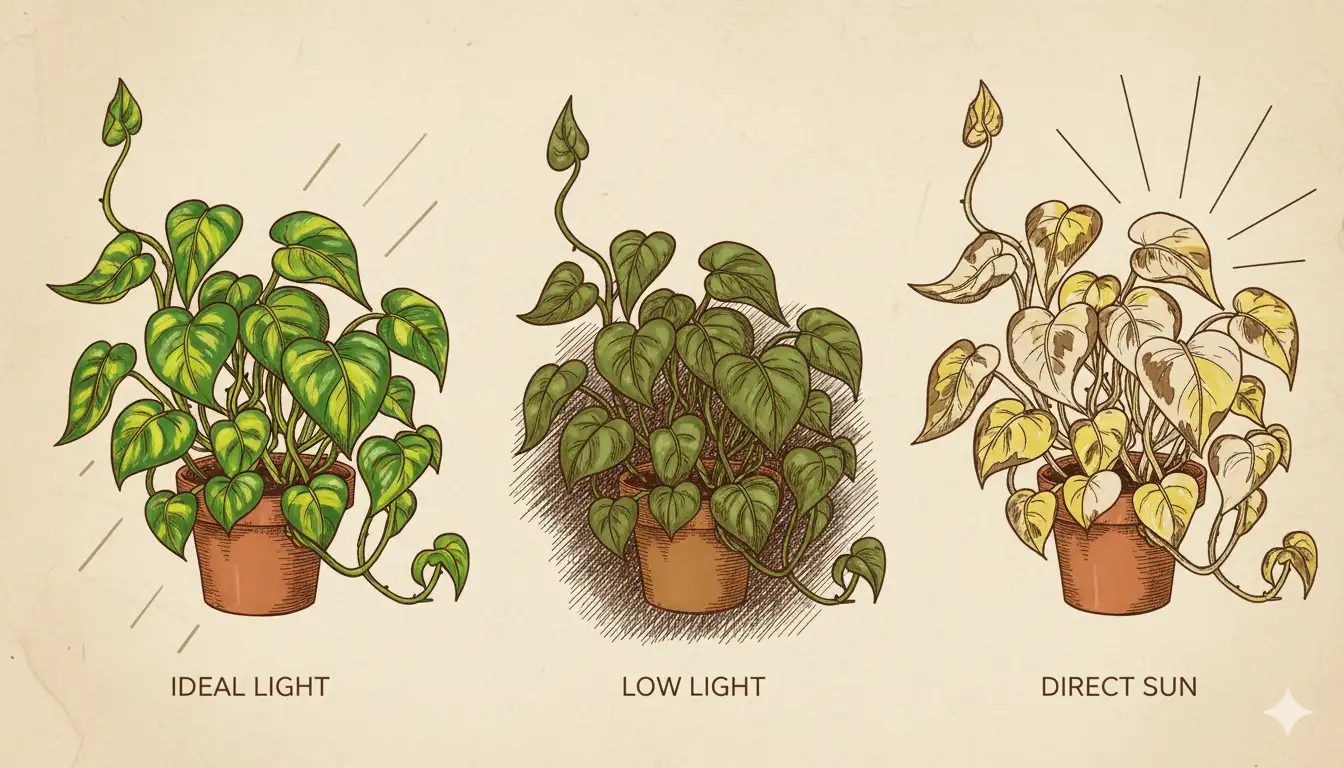
You'll know your pothos is receiving optimal light when it produces steady growth with vibrant leaf colors and good variegation (if applicable). The plant should appear healthy and vigorous, with new leaves developing regularly and the overall growth pattern being compact and bushy rather than leggy.
Measuring Light Intensity for Pothos Light Requirements
Understanding light intensity helps you provide optimal pothos lighting requirements. Bright, indirect light typically measures 1,000-2,000 foot-candles, which is bright enough to cast a shadow but not so bright that it causes discomfort when you look at the light source directly.
You can measure light intensity using a light meter app on your smartphone, or simply use the "shadow test." If you can see a clear shadow of your hand when held above the plant, the light is probably adequate. If the shadow is very faint or nonexistent, the light may be too low for optimal growth.
Duration and Timing of Light Exposure
The duration of light exposure is just as important as intensity for pothos light needs. Pothos plants benefit from consistent light exposure for 6-8 hours daily, preferably during daylight hours when natural light cycles support healthy growth patterns.
Consistent timing helps regulate the plant's internal clock and supports healthy growth rhythms. While pothos can adapt to different light schedules, they generally perform best when exposed to light during natural daylight hours.
Low Light Tolerance in Pothos Plants
One of the most remarkable aspects of pothos light requirements is the plant's ability to survive in low light conditions. This tolerance makes pothos excellent choices for areas of the home that receive minimal natural light.
What Constitutes Low Light for Pothos
Low light for pothos light needs typically means areas that receive less than 500 foot-candles of light, such as north-facing windows, areas far from windows, or rooms with heavy curtains or blinds. In these conditions, pothos plants will survive but may not thrive as vigorously as they would in brighter conditions.
Signs that your pothos is receiving low light include slow growth, smaller leaves, reduced variegation (in variegated varieties), and longer spaces between leaves (leggy growth). The plant may also appear less vibrant overall, with colors that seem muted or washed out.
Adapting Pothos to Low Light Conditions
When growing pothos in low light, adjust your expectations and care routine accordingly. Pothos lighting requirements in low light situations mean the plant will grow more slowly and may need less frequent watering since reduced photosynthesis means lower water usage.
Consider choosing solid green varieties like jade pothos for low light areas, as they're better adapted to these conditions than heavily variegated varieties. These plants have more chlorophyll and can photosynthesize more efficiently in dim conditions.
Supplementing Low Light with Artificial Sources
If you want to improve pothos light needs in low light areas, consider supplementing with artificial lighting. LED grow lights positioned 12-18 inches (30-45 cm) above the plant can provide adequate light for healthy growth even in very dim locations.
Use full-spectrum LED lights that mimic natural sunlight, and provide 12-14 hours of artificial light daily to compensate for the lack of natural light. This can help your pothos thrive even in challenging lighting conditions.
Managing High Light and Direct Sunlight
While pothos can tolerate some direct sunlight, too much can cause problems with pothos light requirements. Understanding how to manage high light situations helps you provide optimal growing conditions without damaging your plant.
Recognizing Too Much Light
Signs that your pothos is receiving too much light include brown or scorched leaf edges, yellowing leaves, wilting despite adequate water, and overall plant stress. These symptoms indicate that the light intensity is too high and is damaging the plant's tissues.
If you notice these symptoms, immediately move your plant to a location with more filtered light. Pothos lighting requirements rarely include direct sunlight, especially during the hottest parts of the day when light intensity is at its peak.
Filtering Intense Light for Pothos Light Needs
If you want to keep your pothos in a bright location, use sheer curtains, blinds, or other filtering materials to reduce light intensity. You can also move the plant several feet away from the window to reduce the intensity while maintaining good light levels.
Another option is to position the plant so it receives morning light (which is less intense) while being protected from afternoon sun. This provides the bright light your pothos needs without the stress of intense afternoon rays.
Gradual Light Acclimation
If you need to move your pothos to a brighter location, do so gradually to prevent shock. Pothos light requirements include the need for gradual acclimation when changing light conditions, as sudden increases in light intensity can stress the plant.
Start by moving the plant closer to the light source for a few hours daily, gradually increasing the exposure time over several weeks. This allows the plant to adapt to the new light conditions without experiencing stress or damage.
Window Placement and Direction for Pothos
Choosing the right window and placement is crucial for meeting your pothos light requirements. Different window directions provide different light qualities and intensities, and understanding these differences helps you select the optimal location.
East-Facing Windows: The Perfect Choice
East-facing windows are ideal for pothos light needs because they provide bright, gentle morning light without the intense heat of afternoon sun. This creates the perfect balance of sufficient light intensity without the risk of leaf damage.
Pothos plants placed in east-facing windows typically show excellent growth, vibrant colors, and good variegation maintenance. The morning light is bright enough to support vigorous growth while being gentle enough to prevent stress or damage.
North-Facing Windows: Consistent and Gentle
North-facing windows provide consistent, gentle light throughout the day, making them excellent choices for pothos lighting requirements. While the light intensity may be lower than other directions, it's consistent and doesn't include the stress of direct sunlight.
Pothos in north-facing windows may grow slightly more slowly than those in brighter locations, but they'll maintain steady, healthy growth without the risk of light-related stress or damage.
South and West-Facing Windows: Proceed with Caution
South and west-facing windows can work for pothos light needs, but they require careful management to prevent excessive light intensity. These windows receive the most intense light, especially during afternoon hours when the sun is strongest.
If using south or west-facing windows, position your pothos several feet away from the glass or use filtering materials to reduce light intensity. Monitor your plant closely for signs of stress and be prepared to adjust placement if necessary.
Seasonal Light Considerations for Pothos
Light conditions change throughout the year, and understanding these seasonal variations helps you provide optimal pothos light requirements year-round. Different seasons bring different challenges and opportunities for plant lighting.
Spring and Summer Light Management
During spring and summer, when natural light is abundant, pothos lighting requirements may include protection from excessive light intensity. The longer days and stronger sun can provide too much light for optimal plant health, especially in south or west-facing windows.
Consider moving your pothos slightly away from windows during these seasons, or use filtering materials to reduce light intensity. This prevents stress while still providing adequate light for healthy growth.
Fall and Winter Light Adjustments
As daylight hours decrease in fall and winter, pothos light needs may require adjustments to maintain optimal growing conditions. The reduced natural light can slow growth and affect plant health, especially in northern climates.
Consider moving your pothos closer to windows during winter months, or supplement with artificial lighting to maintain adequate light levels. This helps prevent the leggy growth and reduced vigor that can occur with insufficient winter light.
Monitoring Seasonal Light Changes
Pay attention to how seasonal light changes affect your pothos and adjust care accordingly. Pothos lighting requirements may need to be reassessed as the seasons change, and what worked in summer may not be optimal in winter.
Regular observation helps you identify when your plant needs more or less light, allowing you to make adjustments before problems become severe. This proactive approach ensures consistent plant health throughout the year.
Artificial Lighting for Pothos Plants
When natural light isn't sufficient, artificial lighting can provide excellent pothos light requirements support. Modern LED grow lights can effectively supplement or replace natural light for healthy pothos growth.
Choosing the Right Artificial Lights
For optimal pothos light needs with artificial lighting, choose full-spectrum LED grow lights that mimic natural sunlight. These lights provide the complete spectrum of light that plants need for photosynthesis and healthy growth.
Look for lights with a color temperature of 5000K-6500K (daylight spectrum) and sufficient intensity to provide 1,000-2,000 foot-candles at plant level. The lights should be positioned 12-18 inches (30-45 cm) above your pothos for optimal results.
Setting Up Artificial Light Systems
When setting up artificial lighting for pothos lighting requirements, ensure the lights are positioned to provide even coverage across the entire plant. Use adjustable fixtures that allow you to maintain the optimal distance as your plant grows.
Consider using timers to provide consistent light schedules, typically 12-14 hours daily to mimic natural daylight patterns. This helps regulate the plant's internal clock and supports healthy growth rhythms.
Combining Natural and Artificial Light
Many pothos growers find success by combining natural and artificial light sources. This approach provides the benefits of both light types while ensuring consistent pothos light requirements are met regardless of weather conditions or seasonal changes.
Use natural light as the primary source and supplement with artificial lighting during darker periods or to extend the daily light duration. This creates a more stable light environment that supports consistent plant health and growth.
Reading Your Plant’s Light Signals
Learning to read your pothos's visual signals is crucial for providing optimal pothos light requirements. Plants communicate their light needs through various visual cues, and understanding these signals helps you adjust lighting conditions accordingly.
Signs of Insufficient Light
Pothos plants receiving insufficient light often show leggy growth with long spaces between leaves, reduced variegation (in variegated varieties), smaller leaves, and overall slow growth. The plant may also appear pale or washed out, with colors that seem muted compared to healthy specimens.
If you notice these symptoms, try moving your plant to a brighter location or supplementing with artificial lighting. Pothos lighting requirements adjustments can often resolve these issues within a few weeks.
Signs of Excessive Light
Too much light in pothos light needs can cause brown or scorched leaf edges, yellowing leaves, wilting despite adequate water, and overall plant stress. The leaves may also appear bleached or faded, indicating damage from excessive light intensity.
If you notice these symptoms, immediately reduce light intensity by moving the plant to a shadier location or using filtering materials to protect it from direct sunlight.
Optimal Light Indicators
Well-lit pothos plants show steady growth, vibrant leaf colors, good variegation maintenance (in variegated varieties), and compact growth habits. The plant should appear healthy and vigorous, with new leaves developing regularly and the overall appearance being lush and attractive.
These indicators suggest that your pothos lighting requirements are being met and your plant is receiving optimal light conditions for healthy growth.
Common Light-Related Problems and Solutions
Even with careful attention to pothos light requirements, problems can arise. Understanding common light-related issues and their solutions helps you quickly address concerns and maintain healthy plants.
Leggy Growth from Insufficient Light
Leggy growth is a common problem when pothos light needs aren't being met. This occurs when the plant stretches toward light sources, creating long spaces between leaves and a generally unattractive appearance.
To fix leggy growth, move your plant to a brighter location and prune back the leggy stems to encourage bushier growth. The combination of improved lighting and pruning will help restore a more attractive growth habit.
Loss of Variegation in Variegated Varieties
Variegated pothos varieties may lose their variegation when pothos lighting requirements aren't optimal. This typically occurs in low light conditions where the plant produces more solid green leaves to maximize photosynthesis efficiency.
To restore variegation, move the plant to a brighter location with indirect light. New growth should show improved variegation patterns, though existing leaves won't regain their variegation.
Leaf Scorching from Excessive Light
Leaf scorching occurs when pothos lighting requirements include too much direct sunlight. This causes brown or black spots on leaves, particularly on the areas most exposed to direct light.
To prevent further damage, immediately move the plant to a location with filtered light and remove severely damaged leaves. The plant should recover over time, though scorched leaves won't heal.
Advanced Light Optimization Techniques
Once you've mastered the basics of pothos light requirements, you can explore advanced techniques that will help your plants reach their full potential. These methods require more attention and equipment but can result in exceptional plant health and growth.
Light Meter Monitoring
Using a light meter to monitor pothos light needs provides precise information about light intensity at your plant's location. This helps you make data-driven decisions about plant placement and lighting adjustments.
Light meters can be purchased as dedicated devices or used as smartphone apps. Regular monitoring helps you identify optimal locations and track changes in light conditions over time.
Rotating Plants for Even Light Exposure
Regularly rotating your pothos ensures even light exposure on all sides of the plant. This prevents the plant from growing lopsided or developing uneven growth patterns that can occur when one side receives more light than the other.
Rotate your plant 90 degrees every week or two to ensure all sides receive adequate light exposure. This simple technique helps maintain balanced growth and an attractive appearance.
Seasonal Light Optimization
Optimizing pothos lighting requirements for different seasons involves adjusting plant placement, supplementing with artificial lighting, and modifying care routines to match changing light conditions.
Create a seasonal light plan that accounts for changes in natural light availability and intensity. This proactive approach ensures your pothos receives optimal light conditions throughout the year.
Frequently Asked Questions About Pothos Light Requirements
How much light does a pothos need?
Pothos need bright, indirect light for 6-8 hours daily for optimal growth. They can survive in low light but will grow slowly and may lose variegation. East or north-facing windows are ideal. Avoid direct afternoon sun which can scorch leaves. Use the shadow test: if you can see a clear shadow of your hand above the plant, the light is adequate.
Can pothos grow in low light?
Yes, pothos can grow in low light conditions, making them excellent low-light houseplants. However, they'll grow more slowly, produce smaller leaves, and may lose variegation in variegated varieties. For best results, provide bright, indirect light. Solid green varieties like jade pothos tolerate low light better than heavily variegated varieties.
What window direction is best for pothos?
East-facing windows are ideal for pothos, providing bright, gentle morning light. North-facing windows also work well with consistent, filtered light. South and west-facing windows can work but require filtering or positioning several feet from the window to prevent leaf scorching. Avoid direct afternoon sun in any window direction.
Can pothos get too much light?
Yes, pothos can get too much light, especially direct afternoon sun. Signs of excessive light include brown or scorched leaf edges, yellowing leaves, wilting, and overall plant stress. Move the plant to filtered light or use sheer curtains to reduce intensity. Gradual acclimation helps when moving to brighter locations.
How do I know if my pothos needs more light?
Signs your pothos needs more light include leggy growth with long spaces between leaves, reduced variegation, smaller leaves, slow growth, and pale or washed-out appearance. Move the plant to a brighter location or supplement with artificial lighting. New growth should improve within a few weeks of better lighting.
Can I use artificial lights for pothos?
Yes, artificial lights work well for pothos. Use full-spectrum LED grow lights with 5000K-6500K color temperature, positioned 12-18 inches (30-45 cm) above the plant. Provide 12-14 hours of light daily. Artificial lights can supplement natural light or replace it entirely in low-light situations.
Why is my variegated pothos losing its variegation?
Variegated pothos lose variegation due to insufficient light. In low light, the plant produces more solid green leaves for efficient photosynthesis. Move the plant to brighter, indirect light to restore variegation in new growth. Existing leaves won't regain variegation, but new leaves should show improved patterns.
Pothos light requirements are the foundation of successful plant care, and understanding these needs will help you create the perfect environment for your plants to thrive. When you get the lighting right, everything else falls into place—your pothos will grow more vigorously, maintain better colors, and resist pests and diseases more effectively.
Remember that light is a dynamic factor that changes throughout the day and year. By learning to read your plant's signals and adjusting light conditions accordingly, you'll develop an intuitive understanding of what your pothos needs to flourish. The result is plants that don't just survive in your space but truly thrive, bringing beauty and life to your home in ways that will amaze everyone who sees them.
Related Pothos Care Guides
- Pothos Care: Complete Guide - Master all aspects of pothos care
- Pothos Varieties Guide - Light needs for each variety
- Pothos Yellow Leaves Guide - Fix light-related problems
- Golden Pothos Care - Variety-specific lighting tips
Expert Resources & Further Reading
- Wikipedia: Epipremnum aureum - Natural light conditions and habitat
- Royal Horticultural Society Plant Database - Light requirement guides
- National Gardening Association - Community lighting advice and solutions