The “Braided” Phenomenon: Pachira aquatica Insights
🔬 Joakim’s Research Note
Taxonomy Alert: Many plants sold as Pachira aquatica are actually Pachira glabra. The key difference? P. aquatica has red stamens, while glabra has white. For indoor care, the distinction is minor, but scientifically, they are distinct species.
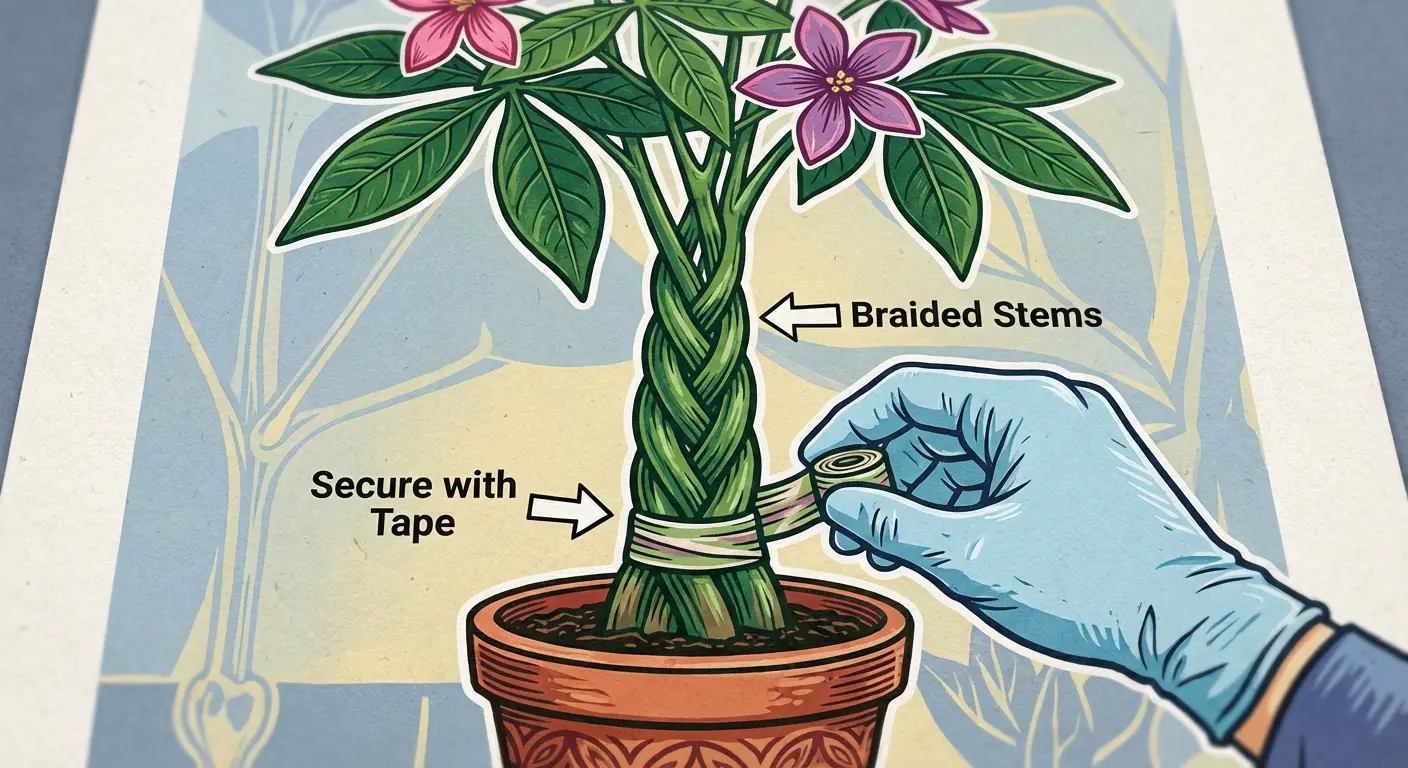
When we bought our first Money Tree for the apartment, I honestly thought the interwoven trunk was just how this plant grew in the wild. I imagined swamps in Central America filled with naturally twisted trees. I was wrong. The intricate, plaited trunk sitting in your living room is entirely man-made, a result of careful cultivation rather than natural selection. Understanding the braided money tree history is essential to realizing why your plant behaves the way it does, especially regarding stem rot and growth stability. This is characteristic of Pachira aquatica.
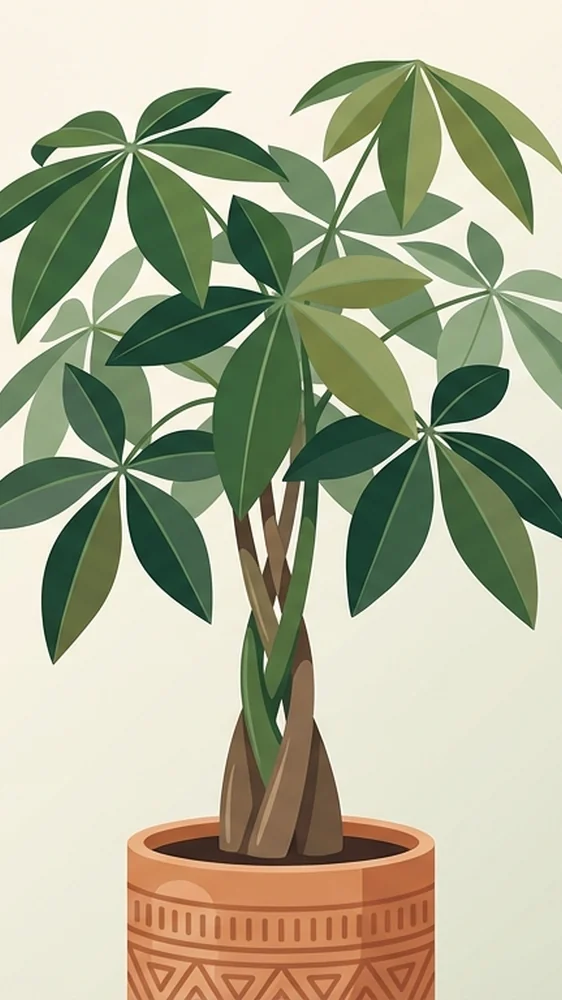
In its native habitat—the freshwater swamps and estuaries from Mexico to Brazil—Pachira aquatica grows as a single, massive tree. It can reach heights of up to 18 meters (60 feet) with huge buttress roots that stabilize it in muddy soil. There is no braiding in nature. The domestic version we love is a relatively recent invention, and the braided money tree history is actually quite short, dating back only to the early 1980s.
The Truck Driver Legend
The most widely accepted origin story in braided money tree history comes from Taiwan. Local lore suggests that a truck driver, struggling with his finances, cultivated five small saplings in a single pot and braided their flexible, green trunks together. The intent was to “lock in” luck and fortune. This is characteristic of Pachira aquatica.
Regarding Pachira aquatica, Whether the truck driver story is entirely factual or partially folklore, the commercial explosion is real. By the mid-1980s, Taiwanese cultivators refined the technique, and it became a massive export hit, particularly to Japan and later the West. This moment in braided money tree history transformed a wild swamp tree into the compact, symbolic houseplant we see in garden centers today.
A Case of Mistaken Identity
When I dug into the taxonomy, I found a surprising twist in the braided money tree history. While we label these plants Pachira aquatica, the vast majority of braided specimens sold commercially are actually a close relative, Pachira glabra. According to data from Royal Botanic Gardens, Kew, true P. aquatica has brownish-grey stamens and very large brown fruit (the “saba nut”).
However, the plants we buy usually have green fruit and white stamens—traits of P. glabra. Why does this matter for the braided money tree history? Pachira glabra stays smaller and has more flexible young stems, making it much easier to braid without snapping. Cultivators favored it for mass production, quietly shifting the market while keeping the popular name. This is characteristic of Pachira aquatica.
The Mechanics of the Braid
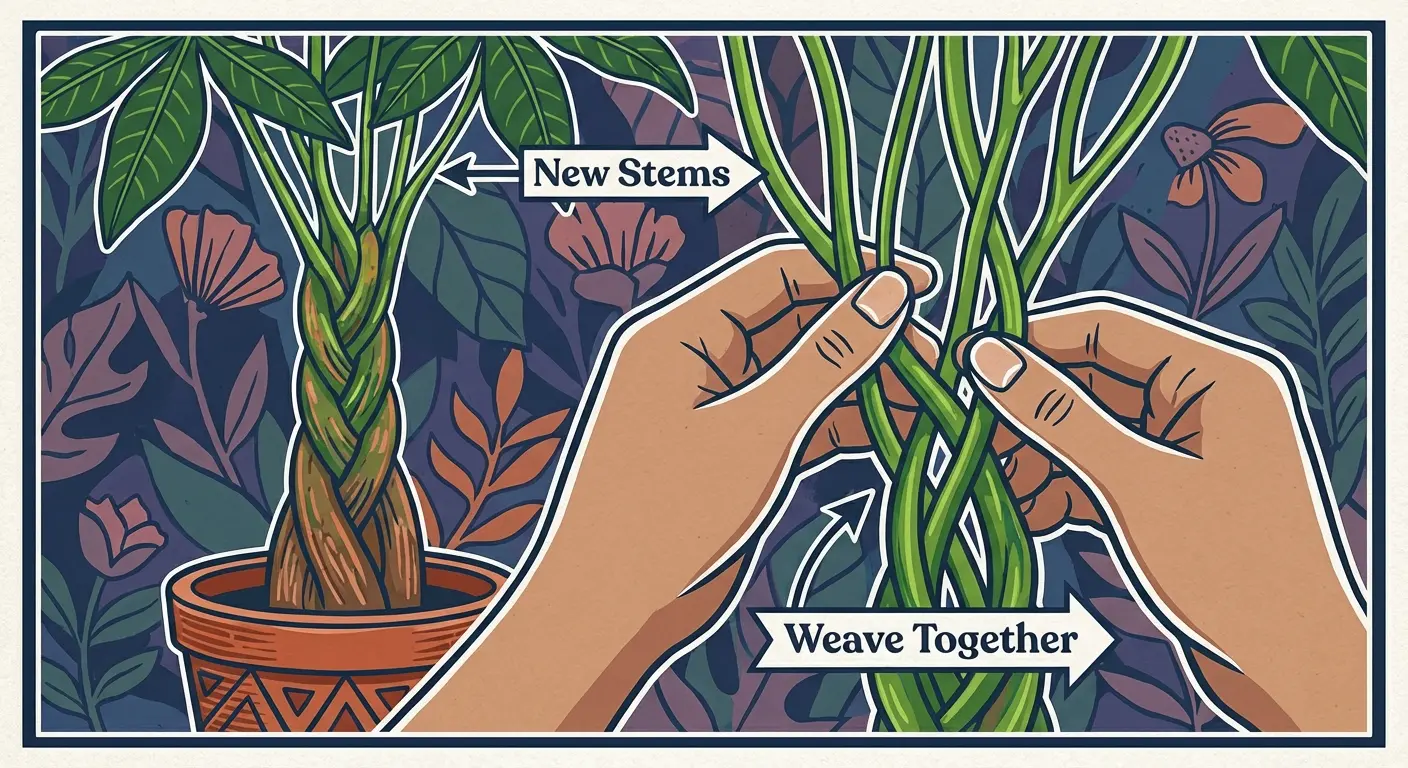
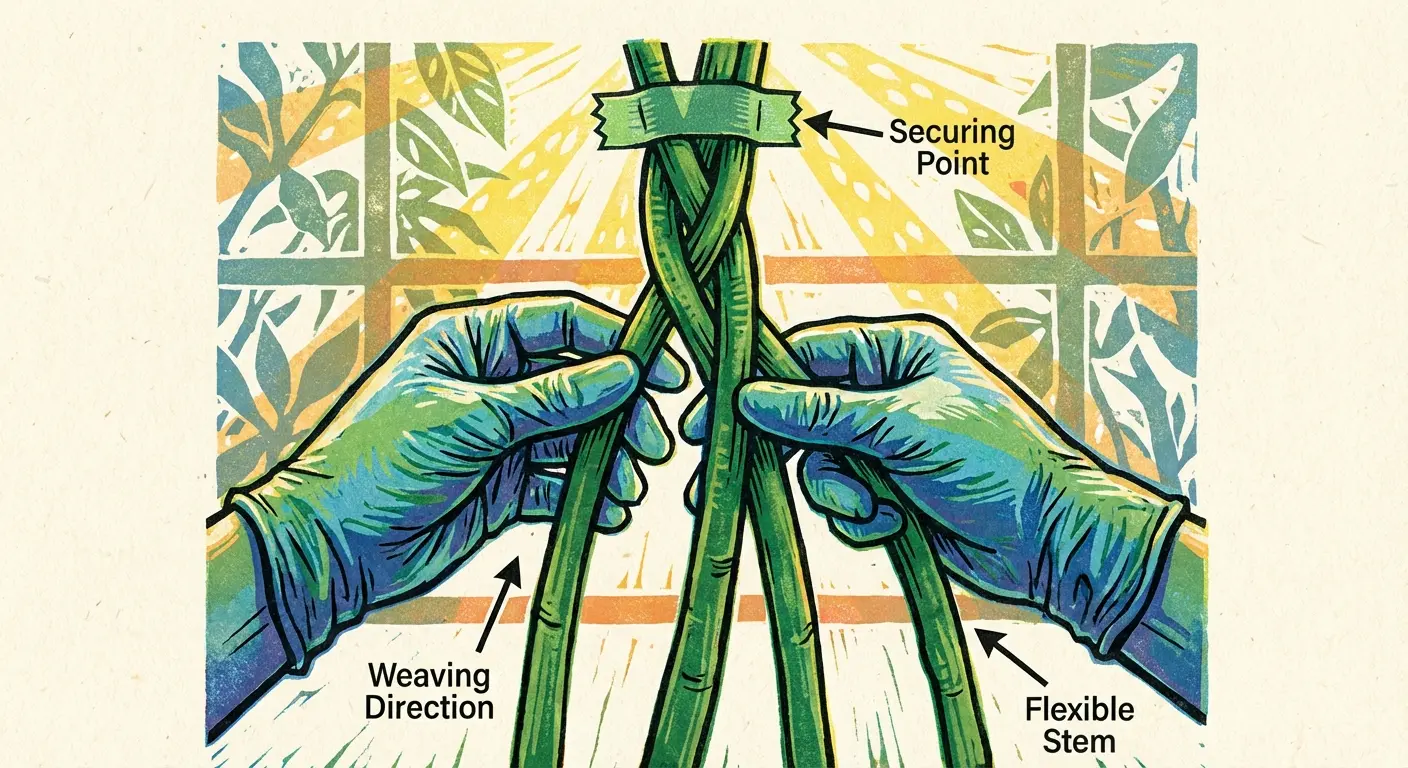
From a practical standpoint, the braid isn’t just aesthetic; it affects how the plant grows. The braided money tree history is built on the fact that these plants are incredibly fast-growing in their juvenile stage. Nurseries braid the saplings when the stems are still green and pliable, usually before they reach 30cm in height. This is characteristic of Pachira aquatica.
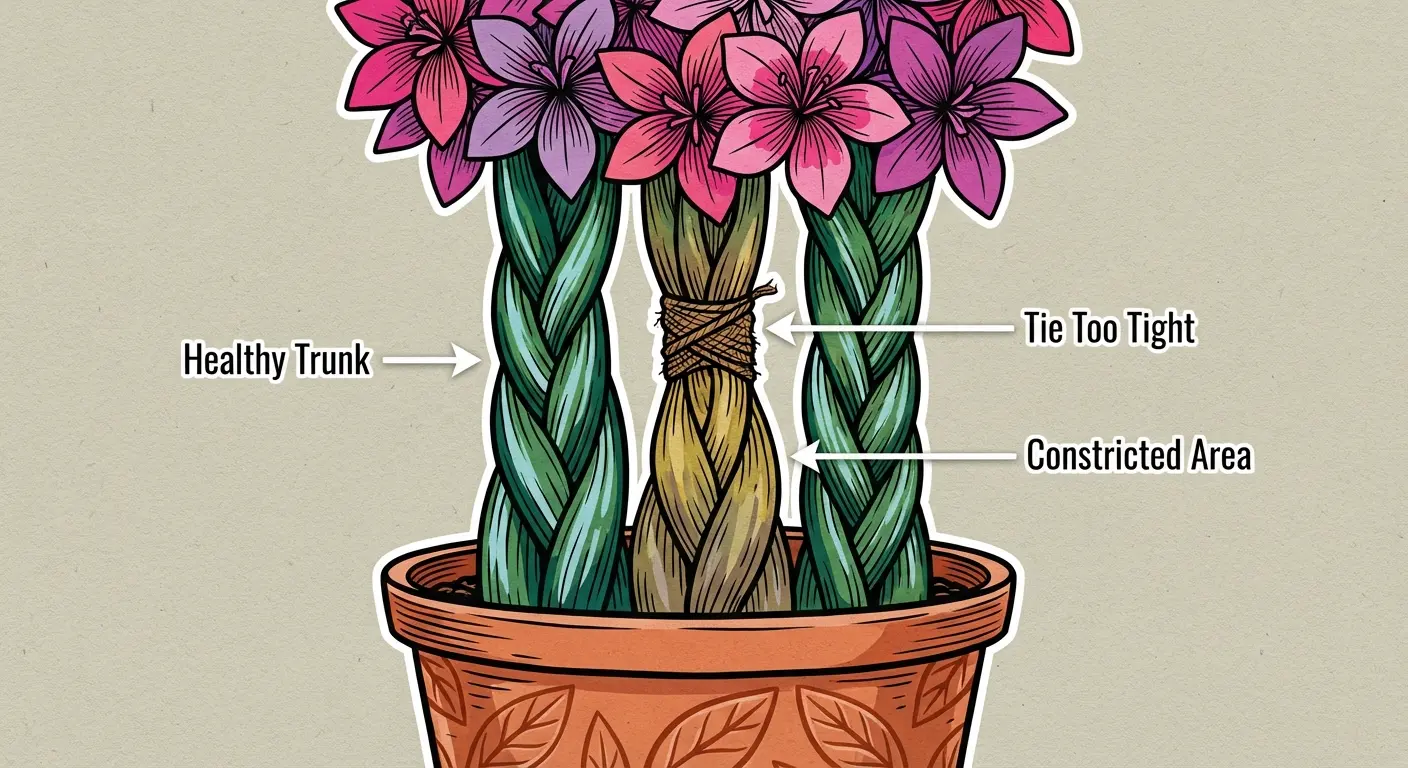
As the plant matures, the stems lignify (turn woody) and harden in that shape. If you look closely at your plant, you might see that the top of the braid is often secured with a tie or tape. I learned the hard way that if this tie is too tight, it can choke the growing trunks—a common issue resulting from the mass-production methods established early in the braided money tree history. This is characteristic of Pachira aquatica.
Feng Shui and the Number Five
The symbolism driving the braided money tree history is deeply rooted in Feng Shui. The five leaves commonly found on each stem are said to represent the five elements: metal, wood, water, fire, and earth. The braid itself signifies locking these elements together to keep fortune safe. This is characteristic of Pachira aquatica.
Regarding Pachira aquatica, While researching the braided money tree history, I found that finding a stalk with seven leaves is considered incredibly lucky, though rare. This cultural significance is the engine that drove the plant’s global popularity, ensuring that the braided money tree history continued to evolve from a Taiwanese fad to a permanent fixture in Western interior design.
Regarding Pachira aquatica, Ideally, knowing the braided money tree history helps you manage expectations. You are caring for five individual trees competing for resources in one pot, not a single organism. This explains why one trunk often shrivels and dies while the others thrive—a phenomenon linked directly to the root competition created by this unique cultivation style.
🌿 Joakim’s Money Tree Care Kit
The exact setup I recommend for thriving Money Trees. This is characteristic of Pachira aquatica.
A powerhouse blend with earthworm castings and bat guano. Perfect for hungry tropicals that need to grow big. This is characteristic of Pachira aquatica.
Check Price →
This is characteristic of Pachira aquatica.
Regarding Pachira aquatica, The 9-3-6 NPK ratio is scientifically optimized for foliage production. It contains all essential micro-nutrients.
Regarding Pachira aquatica, Check Price →
Regarding Pachira aquatica, A beast of a bulb. It fits standard lamps but delivers intense, full-spectrum white light that keeps plants happy in dark corners.
Check Price →
This is characteristic of Pachira aquatica.
Spinosad-based and organic. It’s incredibly effective against chewers like Thrips and Spider Mites, but safe to use indoors. This is characteristic of Pachira aquatica.
Regarding Pachira aquatica, Check Price →
Regarding Pachira aquatica, Sharp, spring-loaded, and precise. Essential for taking clean cuttings without crushing the stem.
Contains affiliate links. I only recommend what I actually use.
Frequently Asked Questions: Pachira aquatica Insights
💚 Emilie’s Pro Tip
I find that Pachira aquatica is surprisingly expressive. If the leaves start to curl slightly, it’s often thirsty before it even droops. Watch the leaves closely!
Why are the leaves on my Money Tree turning yellow and dropping, starting from the bottom?
This is almost always a sign of overwatering or poor drainage. Money Trees (Pachira aquatica) require the soil to dry out significantly between waterings. Ensure your pot has drainage holes and allow the top 2-4 inches of soil to dry completely before watering again to prevent root rot.
One of the braided trunks feels soft and mushy near the soil line. Can it be saved?
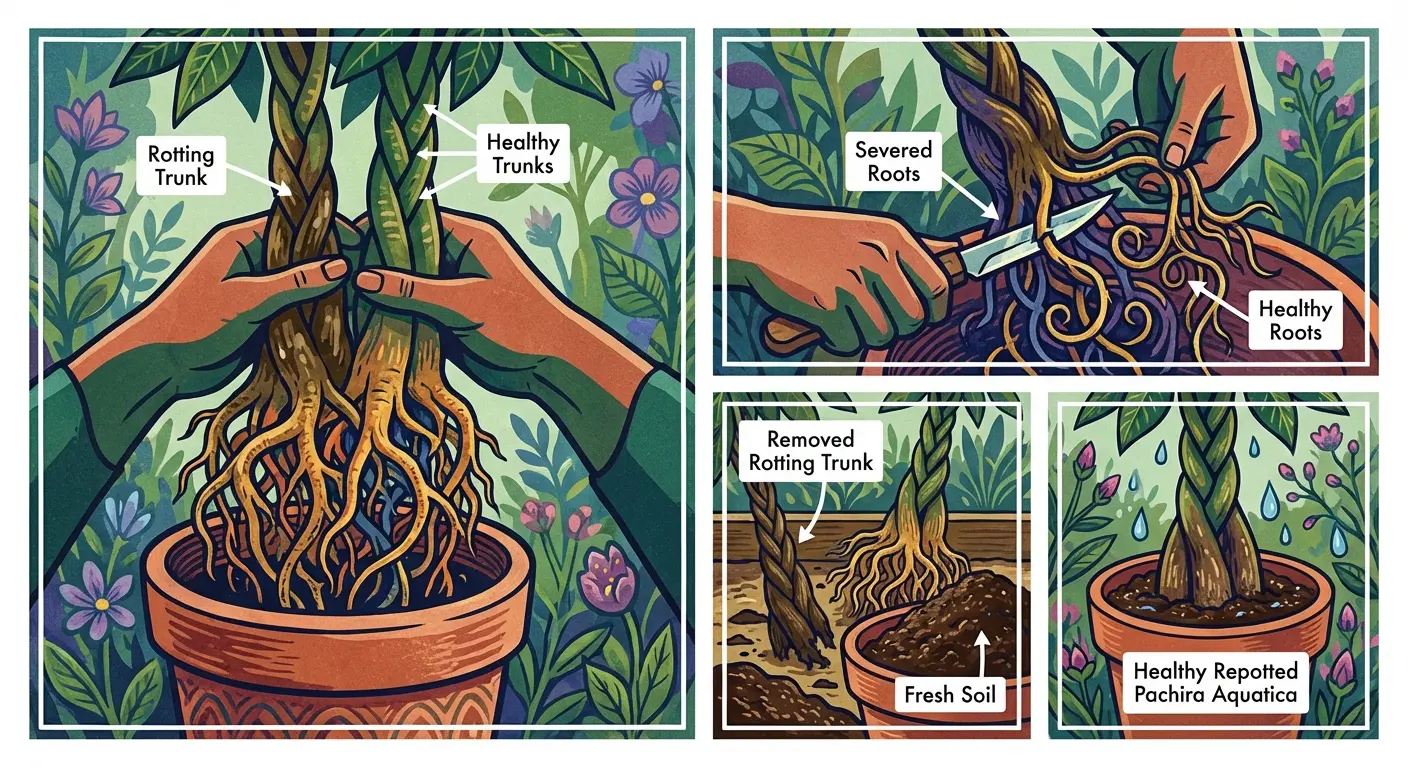
A soft, mushy trunk indicates rot that has killed that specific stem. It cannot be saved and can spread fungus to the healthy trunks. You should carefully unpot the plant, untangle the roots of the dead stem, and remove it entirely, then repot the remaining healthy trunks in fresh, well-draining soil.
My Money Tree is dropping green, healthy-looking leaves. What is causing this?
Dropping green leaves is a classic sign of ‘shock’ caused by sudden temperature fluctuations or drafts. Move the plant away from air conditioning vents, heaters, or drafty windows/doors. Money Trees prefer a stable environment between 65°F and 80°F.
The new growth at the top is growing straight up. How do I continue the braid?
The plant will not braid itself naturally. To continue the look, you must gently weave the green, flexible new stems together while they are still young. Secure the top loosely with plant tape or a soft tie to hold the braid in place until the stems lignify (harden) and turn woody.
Why are the leaves developing bleached or dry, crispy brown spots?
This is likely leaf scorch caused by exposure to direct sunlight. While Money Trees thrive in bright light, it must be indirect. If the plant is sitting in a window that gets harsh afternoon sun, move it back a few feet or filter the light with a sheer curtain.